
15 Fun and Interesting Facts About Oaxaca Mexico

There are a variety of fun and interesting facts about Oaxaca Mexico, but narrowing them down to fifteen was the real challenge.
As a Oaxacan who grew up traveling all around the state, I’ve pulled together the culinary, historical and cultural reasons Oaxaca is so special. Whether you’re planning a visit, or simply wondering what Oaxaca is famous for, this is a good place to start.

This article may contain affiliate links. This means if you click a link on our blog and make a purchase, we earn a commission at no additional cost to you. For full information, please see our disclosure.
1. Oaxaca has been inhabited for over 2,500 years.
The Valley of Oaxaca is one of the oldest continuously inhabited regions in the Americas. Civilizations like the Zapotecs and Mixtecs built thriving societies here long before Spanish colonization, leaving behind impressive ruins, traditions, and cultural practices that are still alive in Oaxacan culture today.
Monte Albán, one of the first major cities in Mesoamerica, was built around 500 BCE. At its peak it housed tens of thousands of people and dominated the region for over a thousand years.
2. The first evidence of domesticated corn was found in Oaxaca.
Oaxaca lies within the region of southern Mexico where maiz was first domesticated nearly 10,000 years ago. Evidence of early corn cultivation has been found in caves near the Mitla archaeological site, placing the origins of one of the world’s most important crops in the Oaxaca valley.
But the story of corn’s origins is more complex than scientists once thought. For decades, the consensus was that maize descended from a single wild grass called teosinte. New research suggests that all modern maize actually descends from a hybrid created about 5,000 years ago, when early domesticated corn crossed with a second highland teosinte variety.
That hybridization, which was likely recognized and encouraged by Indigenous farmers, may be what allowed corn to spread across the Americas and eventually the world. Today corn is still central to daily life, from handmade tortillas to tlayudas, making it one of the most delicious fun facts about Oaxaca.
3. It’s home to the widest tree in the world.
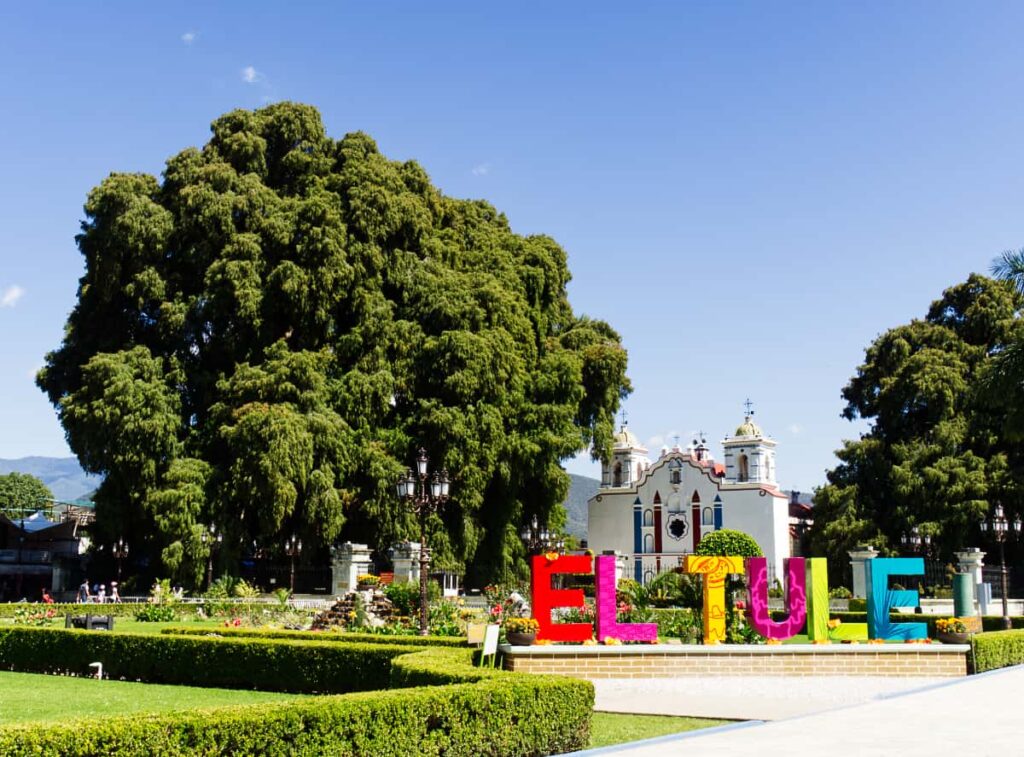
Just outside Oaxaca City stands the Árbol del Tule, widely considered the tree with the largest trunk diameter in the world. Its trunk measures over 14 meters across and would take roughly 30 adults with outstretched arms to encircle it.
Estimated to be at least 1,500 years old, the Tule tree is a Montezuma cypress. It’s known locally as ahuehuete, a tree that the Zapotecs considered to be sacred.
Look closely at the trunk and you’ll find animal figures hidden in the gnarled bark, including an elephant, a jaguar, and a lion. It’s one of the most popular stops on a day trip from Oaxaca, and one that’s hard to fully appreciate until you’re standing in front of it.
4. Oaxaca hosts the largest Indigenous folk festival in the Americas.
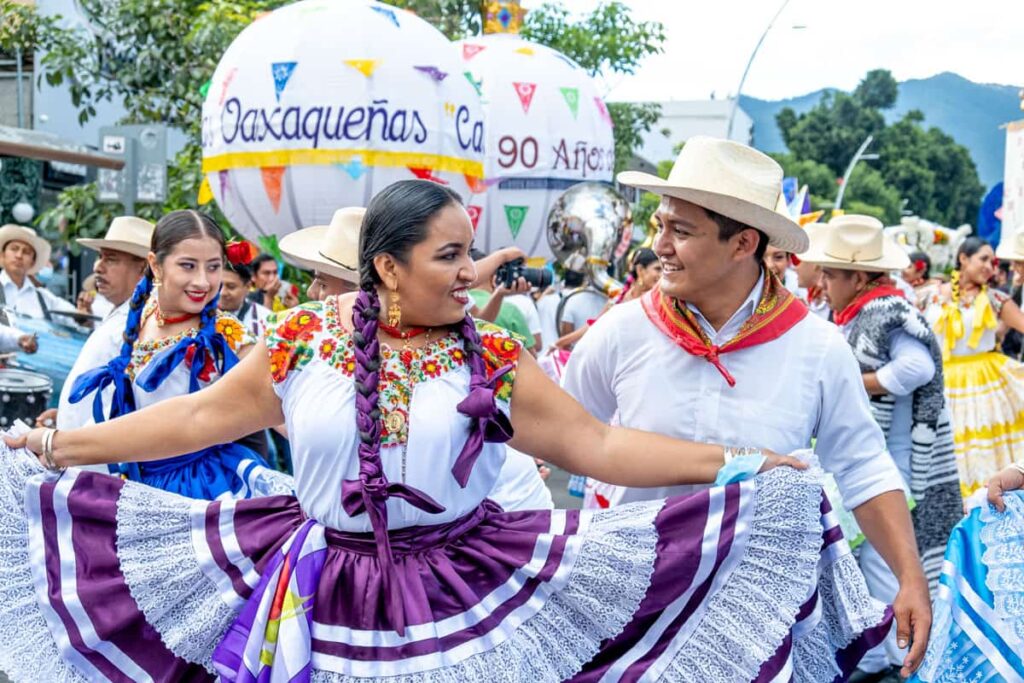
During the month of July, Oaxaca takes its already vibrant energy and turns it up several notches. Residents from each of the state’s eight regions travel to the city to share their traditions through dance, food, clothing, and music in a celebration unlike anything else in Mexico.
The Guelaguetza Festival in Oaxaca is widely considered the largest Indigenous folk festival in the Americas, with roots in Zapotec ceremonies that honor Centeōtl, the god of maize. The word “Guelaguetza” itself comes from the Zapotec language and roughly translates to “reciprocal exchange of gifts and services.” For Oaxacans, it’s more than a festival. It’s a way of life.
5. Oaxaca is considered the gastronomic capital of Mexico.
When people ask what is Oaxaca famous for, food is always at the top of the list. Known for a cultural identity built around its complex moles and regional specialties, Oaxaca is a dream destination for food lovers.
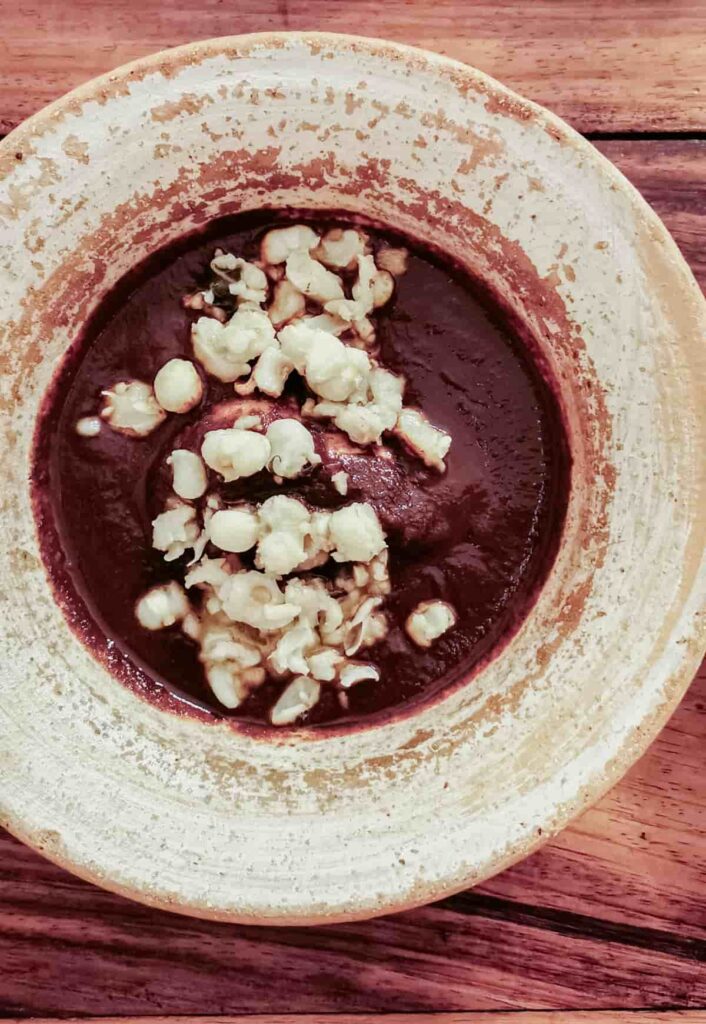
Street food is just as celebrated as restaurant dining, and ingredients like epazote, huitlacoche, and native chiles have been part of the local diet for thousands of years.
And visiting the markets of Oaxaca gives you a sense of just how deep the food culture runs. Whether you’re trying Oaxacan food for the first time or returning for the mole negro you can’t stop thinking about, Oaxaca is a destination that rewards curious eaters.
You’ll also find unique traditional drinks in Oaxaca like tejate and mezcal that are just as tied to local identity as the food itself.
6. Oaxaca produces more mezcal than any other state.

Oaxaca is the heart of mezcal production, responsible for 85-90% of all mezcal made in Mexico. Unlike tequila, which can only be made from one type of agave, mezcal can be produced from around 30 different varieties. And each one imparts its own distinct flavor depending on the species, the soil, and the production method.
Many of Oaxaca’s palenques, the small family-run distilleries where mezcal is made, have been using the same techniques for generations. The production process involves roasting agave piñas in underground pits, crushing them with a stone wheel, fermenting them in wooden vats, and distilling in clay or copper stills.
Joining a Oaxaca mezcal tour is one of the best ways to understand (and taste!) not just this iconic spirit but the culture and the traditions behind it.
7. Insects are a Oaxacan delicacy.
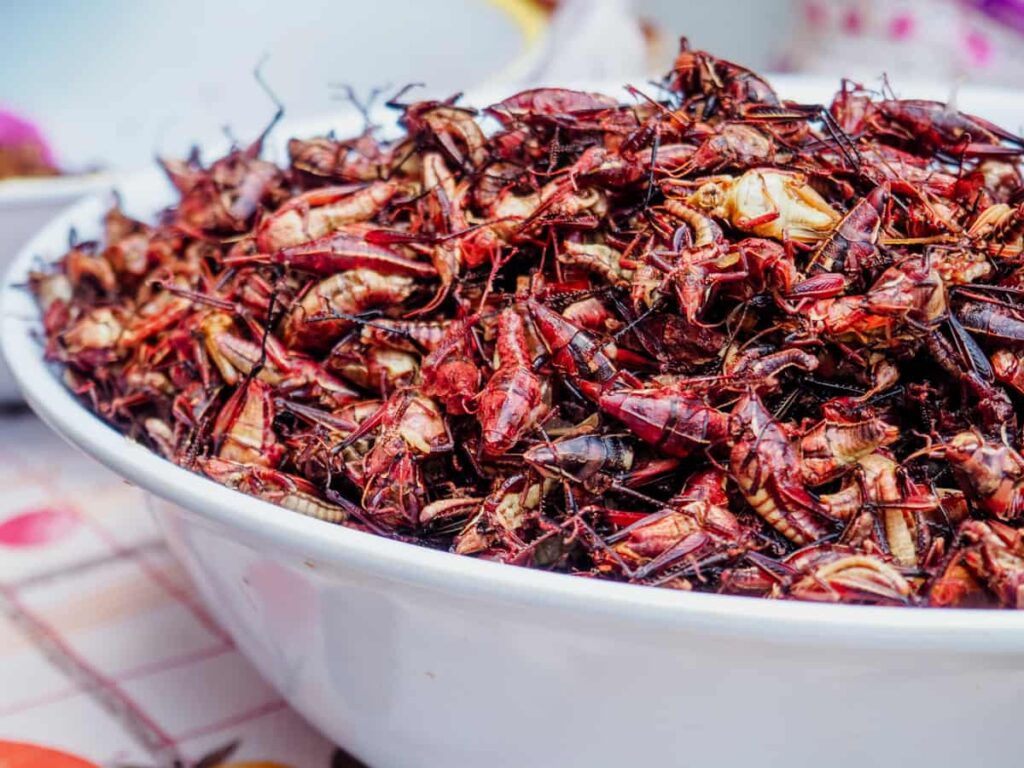
In Oaxaca, insects aren’t a novelty, they’re a culinary tradition. Chapulines are grasshoppers that are toasted on a comal and eaten on their own or with a cold beer. Today you’ll find them as a topping for esquites, guacamole, salsas, and more.
During the rainy season, chicatanas (flying ants) come out of their burrows and are harvested as a seasonal delicacy. The window is short, the demand is high, and a kilo can fetch up to 4,000 pesos. If you’re visiting Oaxaca during the rainy season, look for salsa de chicatanas.
8. More than 16 Indigenous languages are still spoken in Oaxaca.
Oaxaca is one of the most linguistically diverse places in the world. Over 16 Indigenous languages, including Zapotec and Mixtec, are still actively spoken.
It’s more accurate to think of these as language families rather than individual languages. For example, Zapotec alone has over 170 distinct variants, many of which are not mutually intelligible between communities. It’s similar to how Portuguese, Spanish and French all descend from Latin but are entirely different languages today.
9. Oaxaca is a Nahuatl word meaning ‘Place of the Guaje Trees’
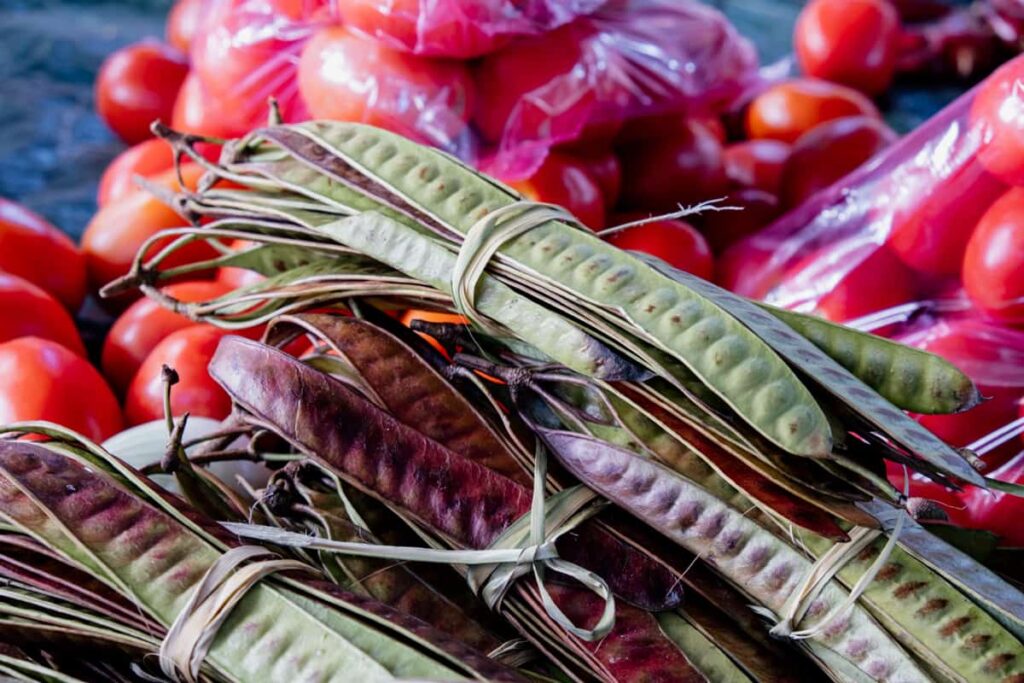
The name “Oaxaca” comes from the Nahuatl word “Huāxyacac,” which means “Place of the Guaje Trees.” But Nahuatl is not the only Indigenous language that has shaped the map of Oaxaca.
Many indigenous communities, cities and regions of Oaxaca are still named in regional native languages. Zapotec communities in the Sierra Norte all have unique names in Zapotec with special meanings tied to identity and tradition.
10. There’s a parade in Oaxaca City every day.
Well, maybe not every single day. But many days there is more than one parade, so it evens out. You’ll likely stumble upon a parade, known locally as a calenda in the afternoons. These lively celebrations feature music, dancing, fireworks, and giant puppets. They’re a regular part of daily life and one of the most fun things to do in Oaxaca City.
Brass bands fill the streets with music as the giant puppets, called monos de calenda, tower over the crowd. And Las Chinas Oaxaqueñas, their hair braided with colored ribbons to match their dress, dance while balancing a flower basket on their head.
If you want to know more, read our guide to parades in Oaxaca to learn about the other participants you’ll see and where to find one in the city.
11. The Night of the Radishes is one of the world’s most unique events.
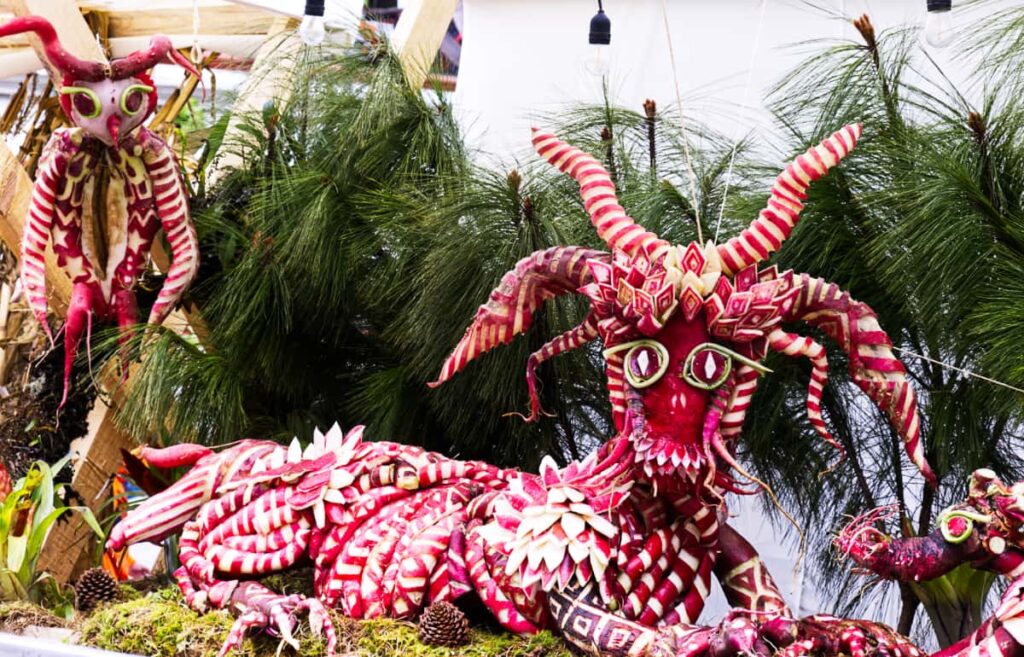
Every December 23rd, Oaxaca City hosts Noche de Rábanos (Night of the Radishes), a tradition that dates back over 100 years. Artists carve radishes into intricate and unique scenes: Catholic saints, Indigenous deities, and snapshots of everyday Oaxacan life.
The scale and level of detail is remarkable given the medium. Entries are judged across various categories and the winners take home up to 20,000 pesos. It’s a one-of-a-kind festival that draws visitors from around the world to Oaxaca in December.
12. Oaxaca is the most biodiverse state in Mexico.
Despite being only the fifth largest state in Mexico, Oaxaca accounts for roughly 50% of all species found in the country. Its dramatic range of geography, from mountain cloud forests and dry valleys to tropical coastline, creates an extraordinary variety of ecosystems packed into a relatively small area.
The state of Oaxaca is home to more than 700 bird species, more reptiles and amphibians than anywhere else in the country, and over 8,400 registered plant species. It also ranks among the five most biodiverse areas in the world for endangered species. For nature lovers the biodiversity in Oaxaca makes it a destination in its own right.
13. More than 1 Million turtles nest on its beaches every year.
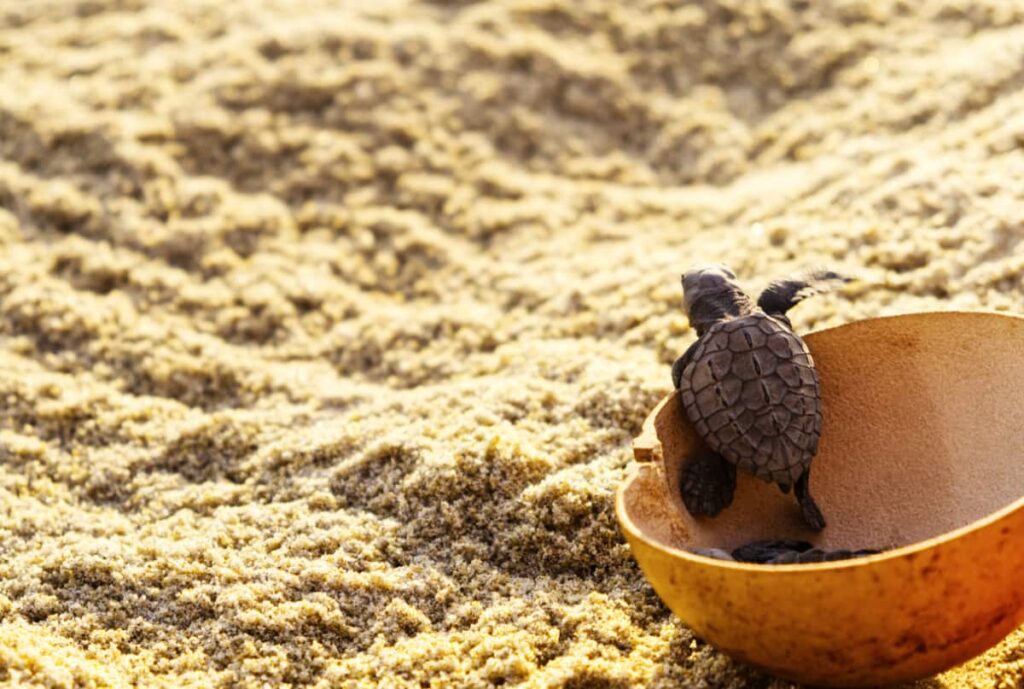
Along the coast of Oaxaca, more than one million sea turtles come ashore annually to lay their eggs, making it one of the most important sea turtle nesting destinations in the world.
Four species nest here: the olive ridley, leatherback, green, and hawksbill. The olive ridley arrives in the greatest numbers, with mass nesting events called arribadas drawing hundreds of thousands of turtles to a single beach over the course of a week.
Participating in a turtle release in Puerto Escondido is a great way to support the conservation efforts in the area while creating a meaningful experience.
14. Humpback whales migrate to its coast every winter.
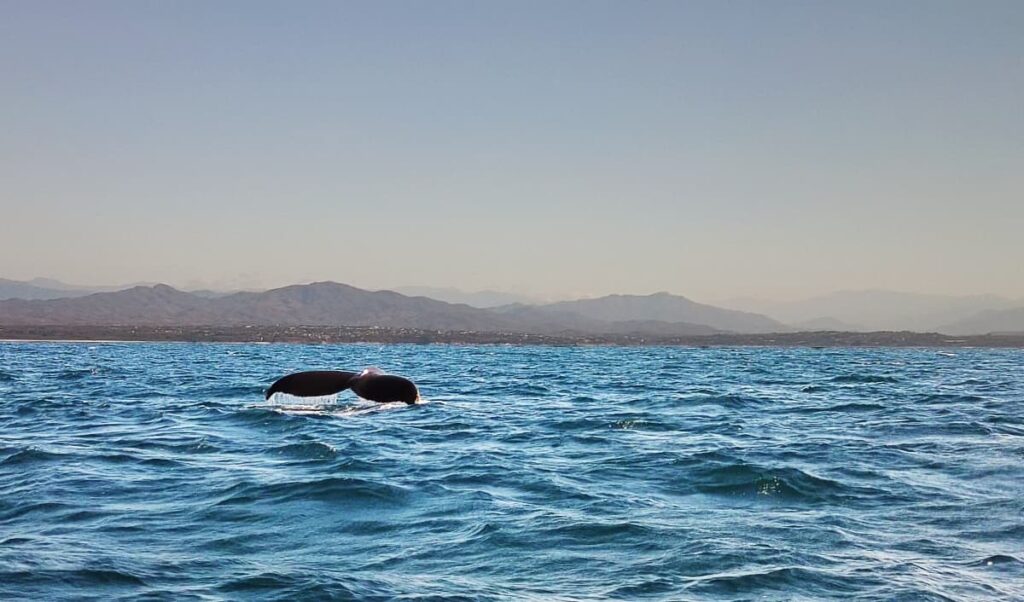
From December to March, humpback whales migrate along Oaxaca’s coast, making it a great time to get out on the water. Sightings aren’t guaranteed in nature but when you spot a whale, the scale of these majestic animals is incredible.
Outside of whale season, the Pacific waters are alive year round with spinner dolphins, named for their habit of spinning as they leap out of the water, and large pods of Pacific spotted dolphins that can number in the hundreds. You’ll also see large sea turtles swimming in the ocean.
The whale and dolphin tours in Puerto Escondido are surprisingly affordable and worth adding to your itinerary to see these incredible animals up close in their natural habitat.
15. Mexico’s only Indigenous president was born in Oaxaca.
Mexico’s first and only ethnically Indigenous president, Benito Juárez, was born in a small Zapotec village in the Sierra Norte of Oaxaca. Orphaned at age three, he didn’t speak Spanish until he was twelve when went to Oaxaca City in search of an education. He went on to become a lawyer, governor of Oaxaca, and eventually president, serving from 1861 to 1872.
He is one of the country’s most respected historical figures and played a major role in shaping modern Mexico. There are monuments all over Oaxaca dedicated to him and his famous quote, “respect for the rights of others is peace,” is spelled out on the backside of Cerro de Fortin in Oaxaca City.
What are some fun facts about Oaxaca?
Oaxaca is full of fun facts. The world’s widest tree is located just outside of the city, over a million sea turtles nest on its beaches each year, and on December 23rd artists carve radishes into elaborate scenes for La Noche de Rábanos. It’s also one of the most biodiverse regions in Mexico and home to dozens of Indigenous cultures and languages.
What is Oaxaca famous for?
Oaxaca is famous for its food, especially mole, mezcal and tlayudas. Oaxaca is also famous for its rich Indigenous culture, vibrant festivals, and colonial architecture. It’s often considered the cultural and culinary heart of Mexico, offering a unique blend of history, tradition, and natural beauty.
What is the nickname of Oaxaca?
The nickname of Oaxaca City is la Verde Antequera, a nod to the green quarry stone used in many of its historic buildings. It’s also called the Land of the Seven Moles due to its famous variety of mole sauces. And it’s also widely regarded as the cultural capital of Mexico because of its deep Indigenous roots, festivals, and artistic traditions.
Wrapping Up Interesting Facts About Oaxaca
These fun facts about Oaxaca Mexico only scratch the surface of what makes this region so special.
From its ancient history and Indigenous traditions to its world-famous cuisine and natural beauty, Oaxaca offers something you won’t find anywhere else.
Whether you’re visiting for the food, culture, or landscapes, many visitors start planning their return trip before they even leave.