
Calendas: What and When are the Parades in Oaxaca?

One of my favorite things about Oaxaca is stumbling into a parade when I least expect it.
You’re walking through Centro, maybe heading to dinner or wandering toward Santo Domingo, when you hear a brass band somewhere in the distance. A few streets later, fireworks crack overhead, a giant papier-mâché figure sways above the crowd, and dancers fill the street. Before you know it, you’ve joined a celebration without even meaning to.
These festive processions, known as calendas, are one of Oaxaca’s most beloved traditions. Part parade, part community celebration, and part moving street party, they bring together music, dance, and centuries of tradition.
So now you’re probably wondering, when are the calendas in Oaxaca? Continue reading to learn more about the parades in Oaxaca, how to find one, and what the giant puppets, spinning globes, and costumed dancers are all about.
This article may contain affiliate links. This means if you click a link on our blog and make a purchase, we earn a commission at no additional cost to you. For full information, please see our disclosure.
What is a Calenda?
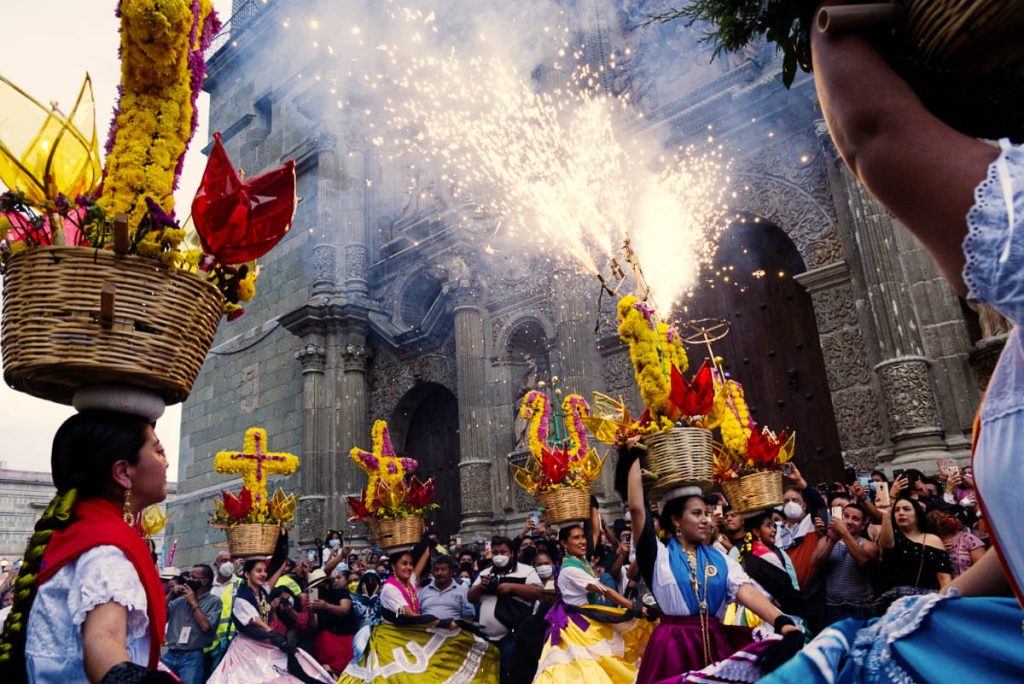
A calenda in Oaxaca is a festive street parade that celebrates everything from weddings and patron saints to major cultural events like Guelaguetza. Made up of a brass band, dancers, fireworks, giant puppets, and community members, calendas transform ordinary streets into joyful public celebrations. While many have religious roots, today they are a vibrant expression of Oaxacan culture and community pride.
Types of Parades
Visitors often use the word calenda to describe any Oaxaca parade, but locals distinguish between several different types of processions. While they share many elements, each has its own purpose and traditions.
- Convite – Think of a convite as an invitation to a celebration. They take place before a festival, such as La Guelaguetza to announce the festivities. Musicians, dancers, and fireworks encourage residents to join the upcoming event.
- Calenda – The classic parade Oaxaca visitors think about. A calenda features giant puppets, marmotas, brass bands, dancers, fireworks, and community participation. Traditionally they celebrate a religious holiday or patron saint, but today calendas are used to celebrate any special event: weddings, quinceañeras, baptisms, graduations and more.
- Comparsa – A comparsa is especially common during Día de Muertos in the neighborhood of Jalatlaco or the Etla Valley. These neighborhood parades tend to be more theatrical, with elaborate costumes, masks, characters, and performances. While a calenda feels celebratory, a comparsa often feels playful, dramatic, and artistic.
When are the Calendas in Oaxaca?
Calendas in Oaxaca happen year-round, but they are most common during religious festivals, patron saint celebrations, Guelaguetza season, Día de Muertos, and Christmas festivities. Wedding parades also take place throughout the year, particularly on weekends. While there is no official Oaxaca calenda schedule, visitors who spend time in Centro Histórico have a good chance of encountering one.
How to Find a Parade in Oaxaca
Part of the magic of a calenda is stumbling upon it by accident. Some of my favorite memories in Oaxaca involve hearing distant trumpets, following the sound down a side street, and suddenly finding myself in the middle of a celebration.
That said, there are a few ways to improve your odds.
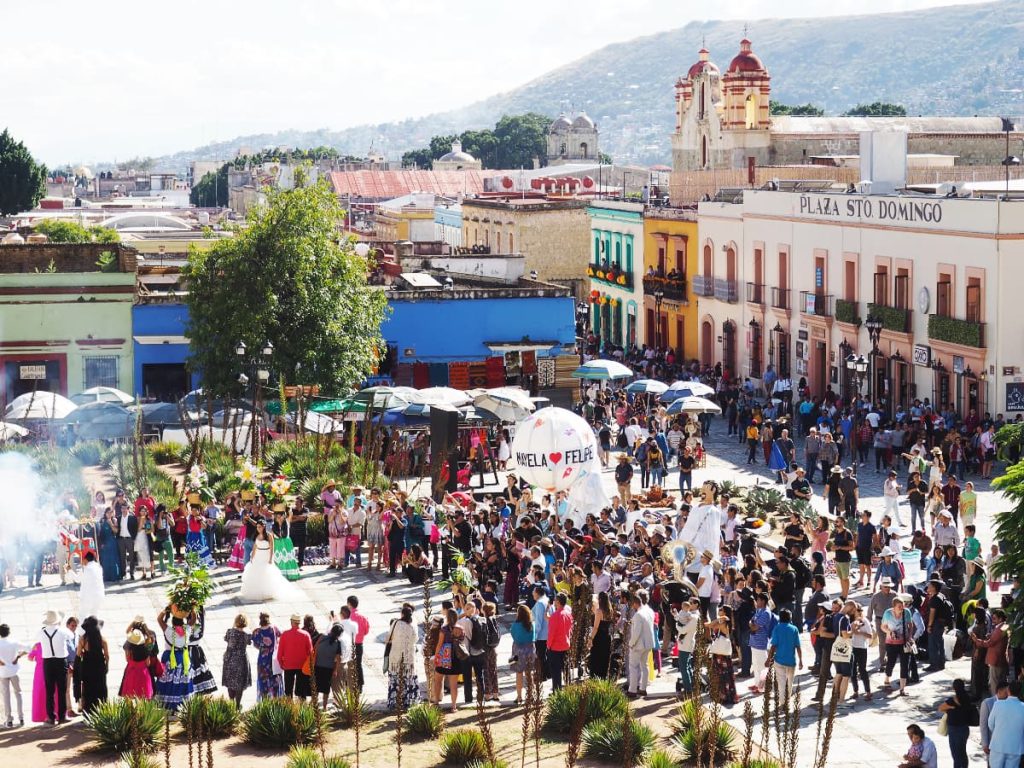
One of the easiest options is to spend time around Santo Domingo Church on Friday and Saturday afternoons. Wedding parades frequently start in the plaza in front of the church and have become one of the top activities in the city.
Visiting Oaxaca City during the most popular festivals in the region offers another excellent chance. During Guelaguetza, Día de Muertos, and major patron saint fiestas, processions are common throughout the city.
You can also ask hotel staff, tour guides, or local residents about upcoming celebrations. Neighborhood fiestas are often advertised locally but may not appear on tourist calendars.
And finally, don’t underestimate the power of simply following the music. If you hear a brass band and fireworks in the distance, head toward the sound. You never know what’s a few blocks over.
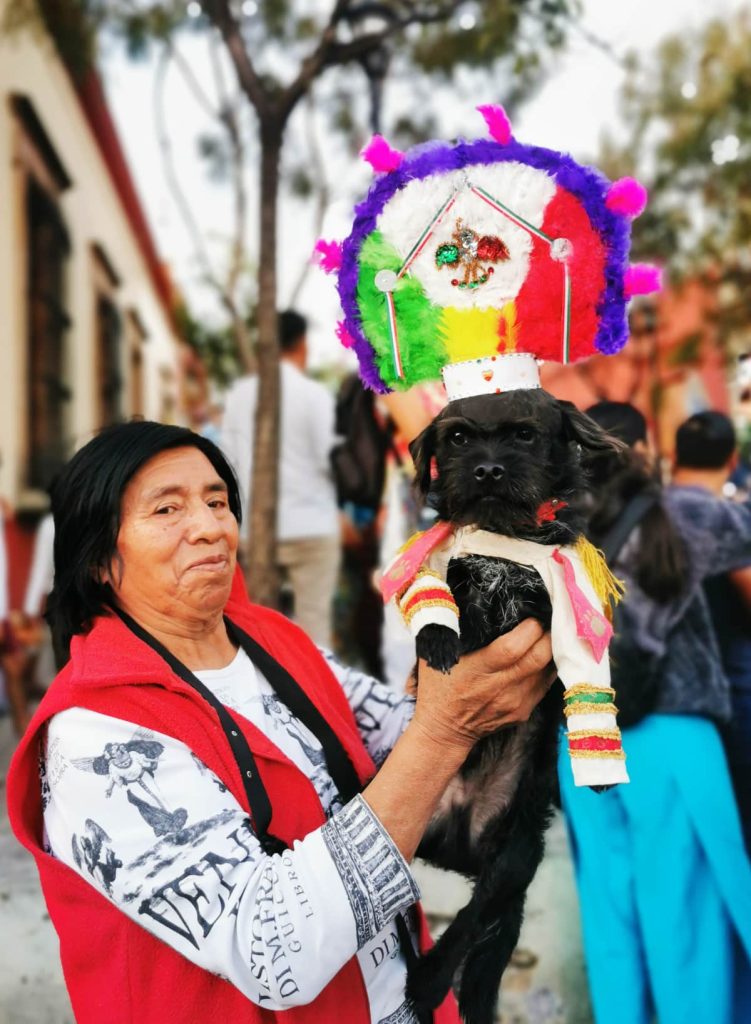
Elements of a Calenda: Monos, Marmotas, and More
A calenda is much more than a parade. It is a moving collection of traditions, symbols, performers, and art forms that have been passed down through generations. Each element contributes something unique to the experience, from the booming music to the towering puppets that rise above the crowd.
Marmotas
Leading the parade is a marmota, a giant sphere mounted on a tall pole, spun overhead by a skilled performer. The spinning movement creates a sense of excitement and anticipation as it leads the way.
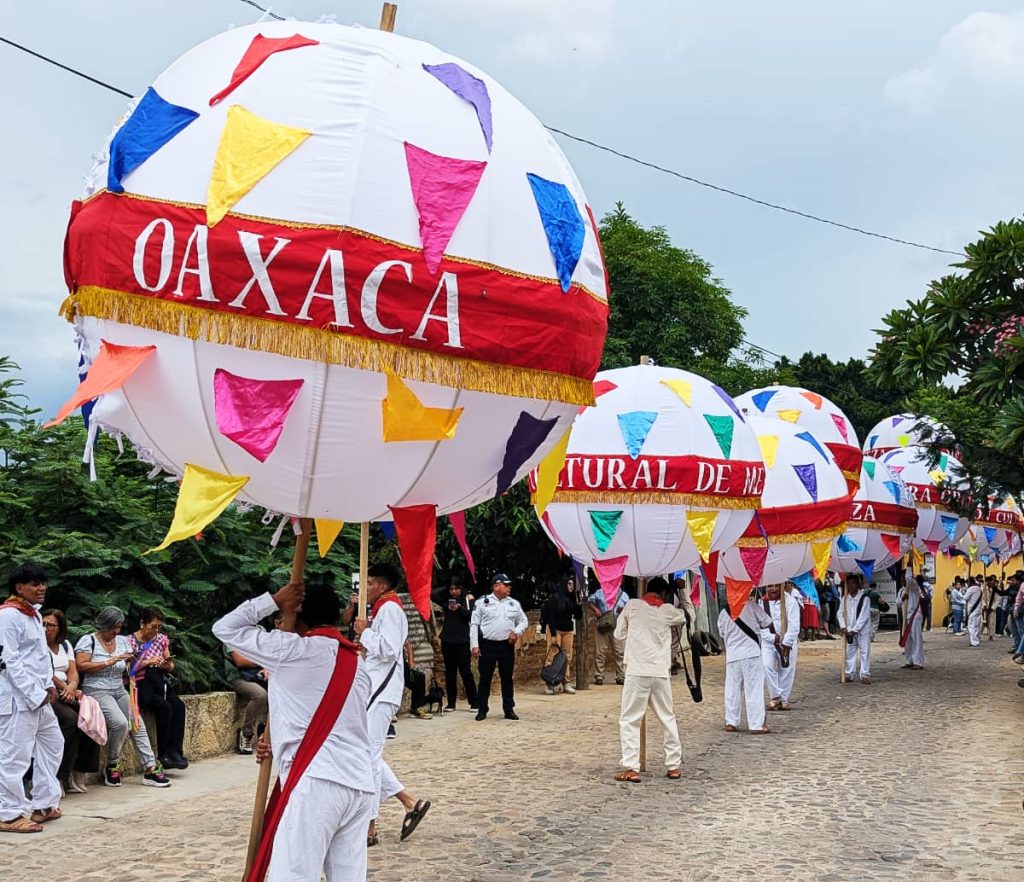
The decoration on the marmota announces the occasion: the couple’s names for a wedding calenda, a school’s name for a graduation, and so on. At night they are illuminated and catch the eye from blocks away.
Monos de Calenda
The monos de calenda are the undisputed stars of the parade. These towering papier-mâché figures can stand more than 10 feet tall and sway dramatically with their hands swinging above the crowd as hidden handlers dance beneath them.
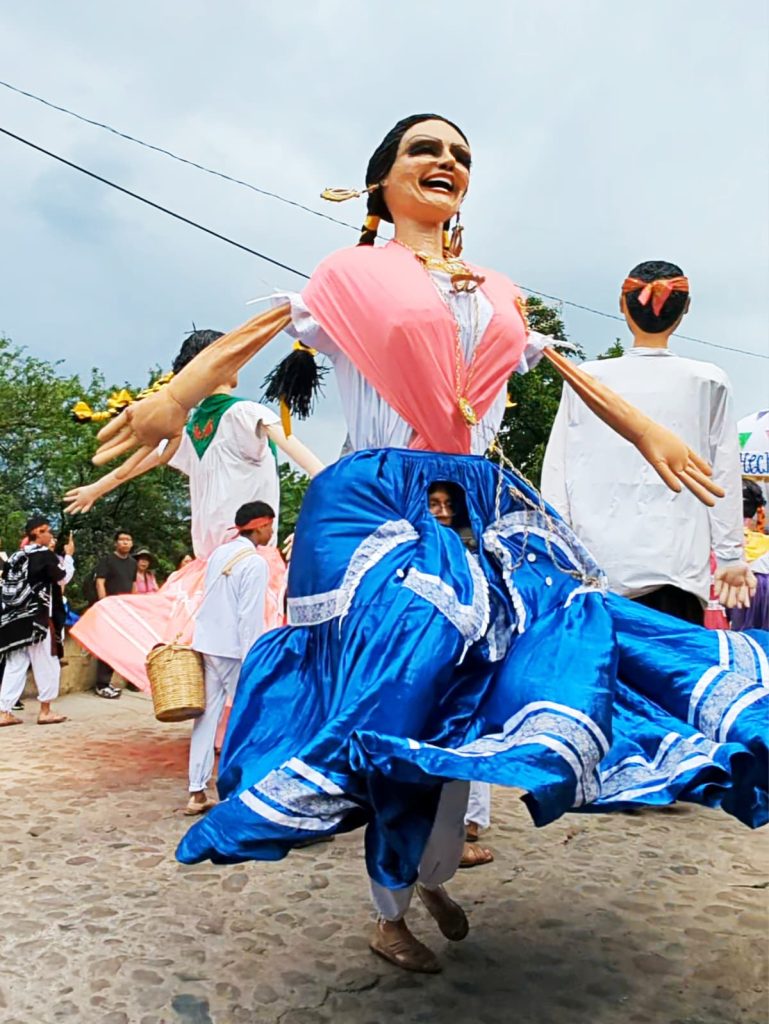
Oaxaca wedding calendas feature giant monos in the likeness of the bride and groom. During other celebrations, monos can represent historical characters, cultural figures, or mythical creations.
Creating these giants is a specialized art form. Skilled artisans spend weeks designing, sculpting, painting, and balancing each figure. Long after the music has faded, the image many visitors remember most is a giant mono turning a corner above Oaxaca’s cobblestone streets.
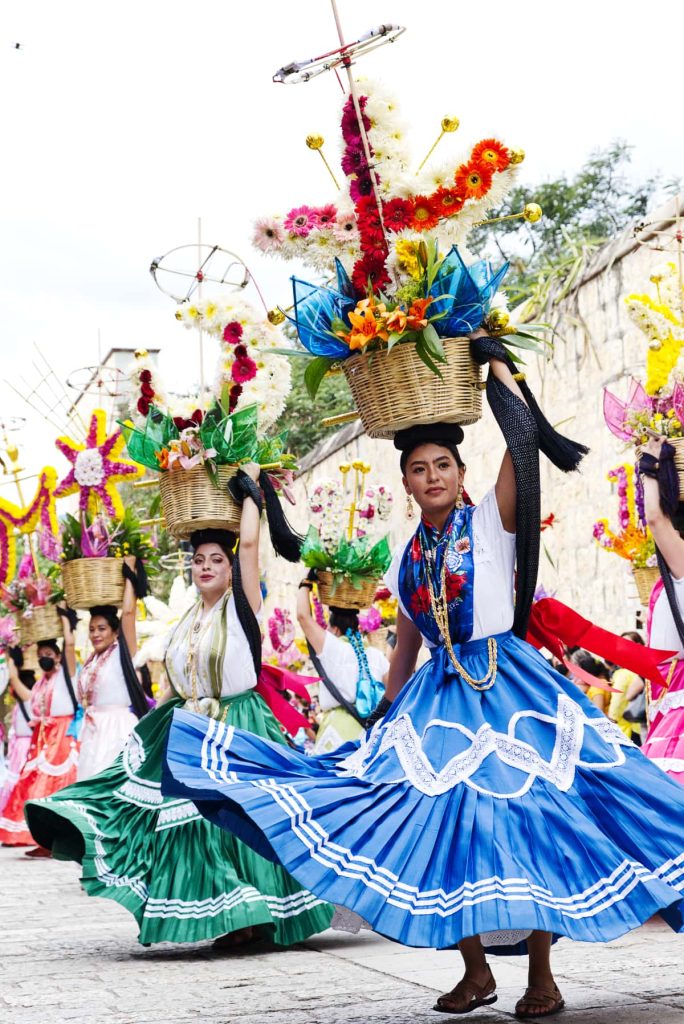
Las Chinas Oaxaqueñas
Few images are more iconic than Las Chinas Oaxaqueñas dancing in a calenda.
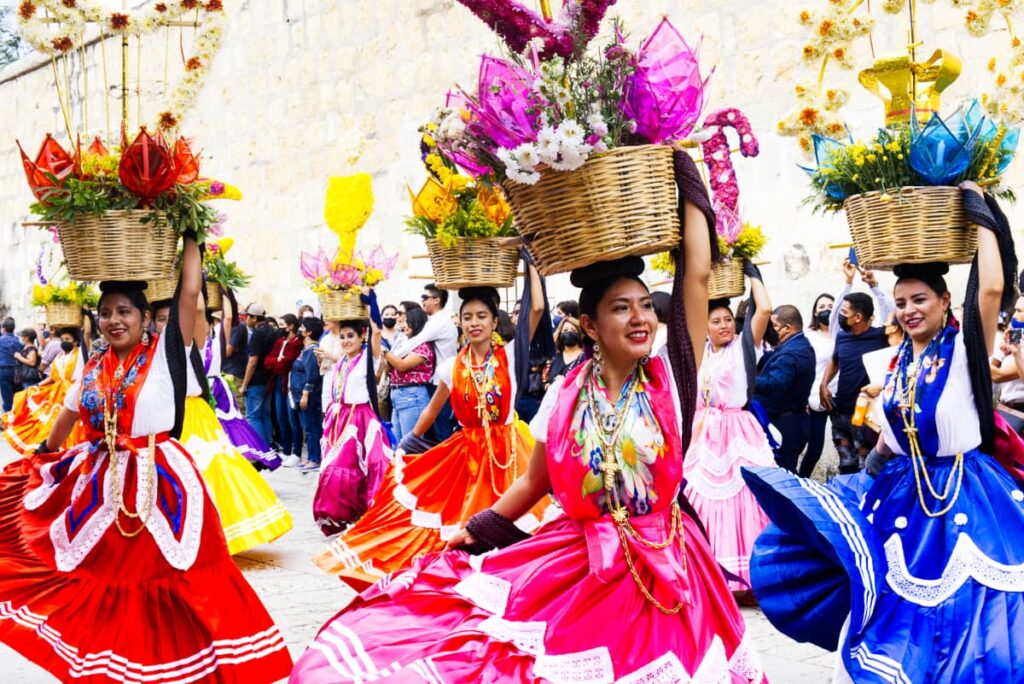
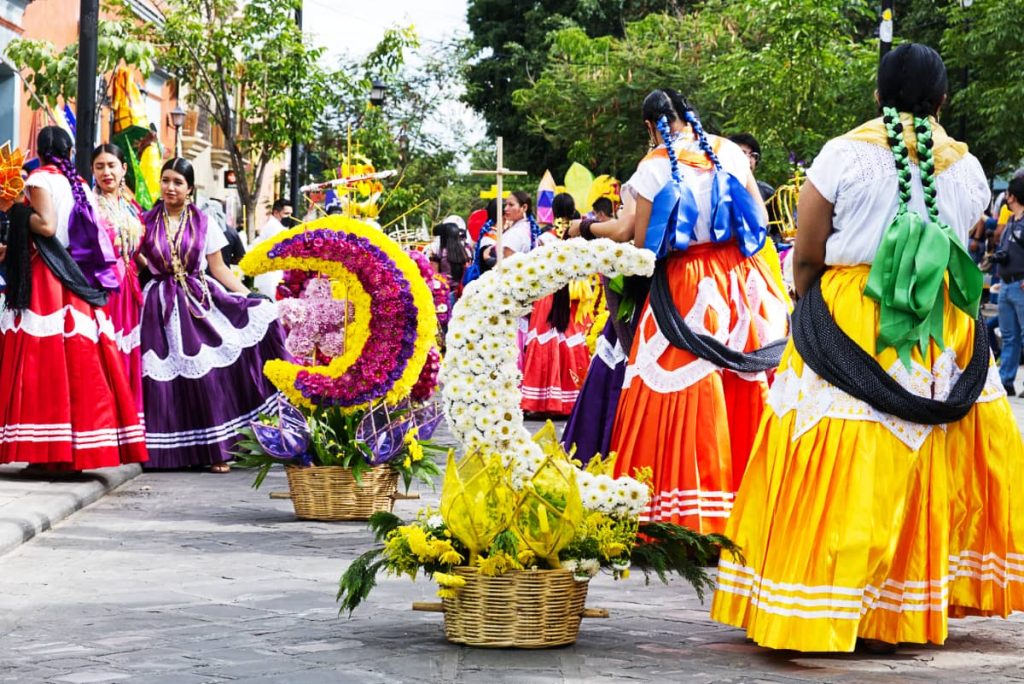
Dressed in colorful skirts, white blouse, and a scarf, they balance flower-filled baskets on their heads while performing graceful dances. Their presence is especially associated with Oaxaca City and has become one of the most recognizable symbols of local calendas.
The movement of their skirts, the flowers, and the music creates some of the most beautiful moments of the entire procession.
Faroleros
Alongside Las Chinas Oaxaqueñas dance the faroleros, men who carry laterns mounted on tall poles as the group moves through the streets.
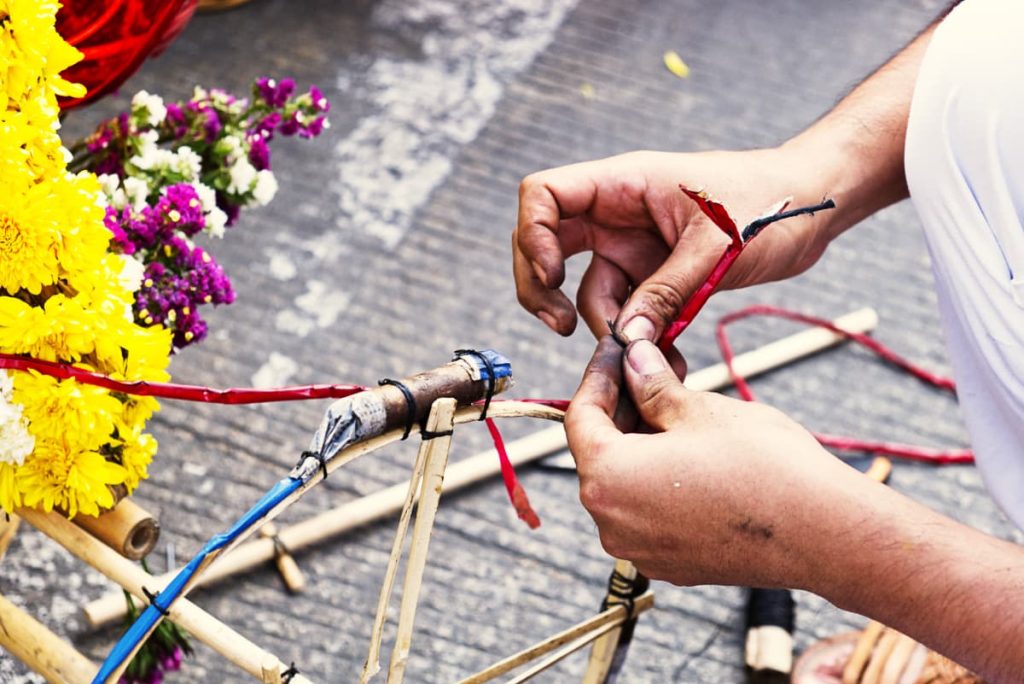
Dressed in white cotton pants and shirts, faroleros traditionally carried simple lanterns decorated with tissue paper and flowers. You’ll still see those today, but the art form has grown into hand-built sculptures that rise above the crowd: a crescent moon, an ear of corn, and other symbols tied to Oaxaca.

Tiliches
Originating from Putla, a town about 5.5 hours away from Oaxaca City, tiliches wear costumes covered in strips of brightly colored fabric that ripple and bounce with every movement.
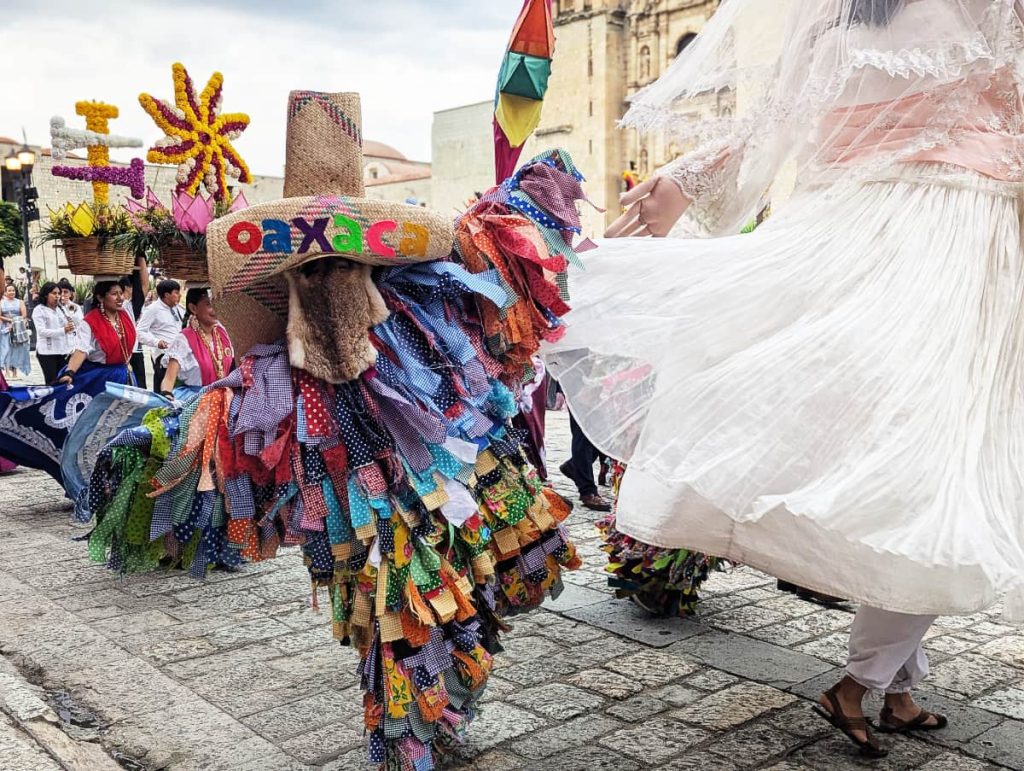
Their energetic dancing brings an element of fun and spontaneity to the parade. Children are often particularly fascinated by the costumes, which seem to transform the dancers into moving explosions of color.
Zancudos
Known locally as zancudos, these stilt walkers tower above the crowd and are among the most impressive performers in a calenda.
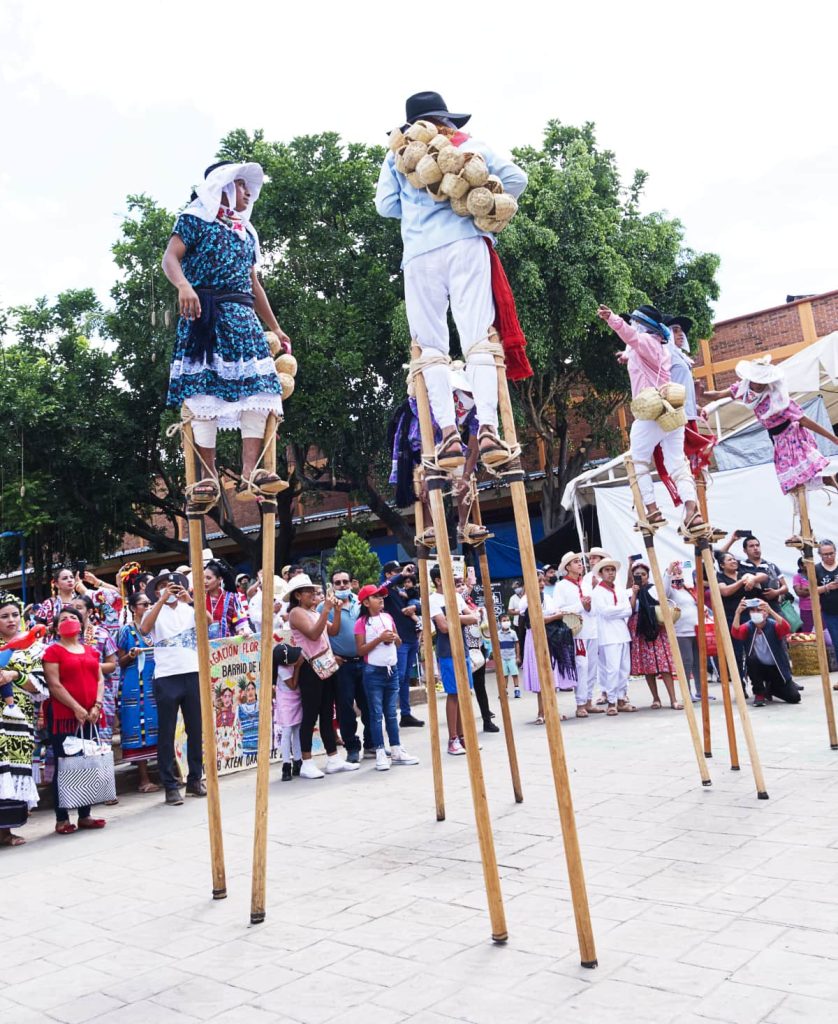
Their name comes from the Spanish word for long legged mosquito which references their long, thin legs. This dance is traditional of the Villa de Zaachila area, and many wear folkloric dance skirts, huaraches and colorful clothing. Watching them navigate crowded streets while dancing and interacting with spectators is both impressive and slightly nerve-wracking. You always have a sense they might fall-yet in all my 20 something years in Oaxaca I’ve never seen it happen!
Diablos
The diablos bring theatrical flair to many calendas and comparsas.
Wearing elaborate devil masks and dramatic costumes using animal fur, they dance through the streets entertaining spectators. These figures originate in Oaxaca’s coastal region and are part of Oaxaca’s Afro Mexican heritage. They are usually playful figures whose performances reflect the Indigenous and African traditions that shaped Oaxacan culture.
Feather Dancers
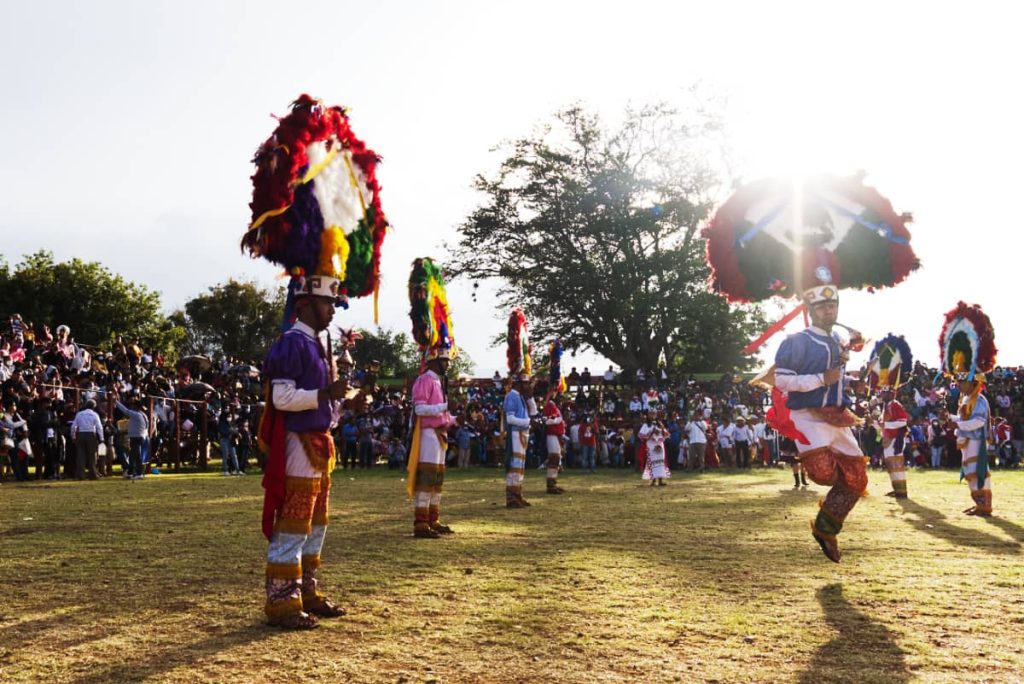
The feather dancers, or Danzantes de la Pluma, perform one of Oaxaca’s most significant traditional dances. Their elaborate feathered headdresses can weigh several pounds and are paired with embroidered costumes that reflect generations of craftsmanship.
The dance itself tells the story of the Spanish conquest from an Indigenous perspective and is traditionally performed during patron saint festivals and Guelaguetza celebrations. While not every calenda includes feather dancers (they’re originally from Teotitlan) seeing them dance through the streets adds another layer of cultural significance to the celebration.
Brass Bands
Usually you’ll hear a calenda before you see it.
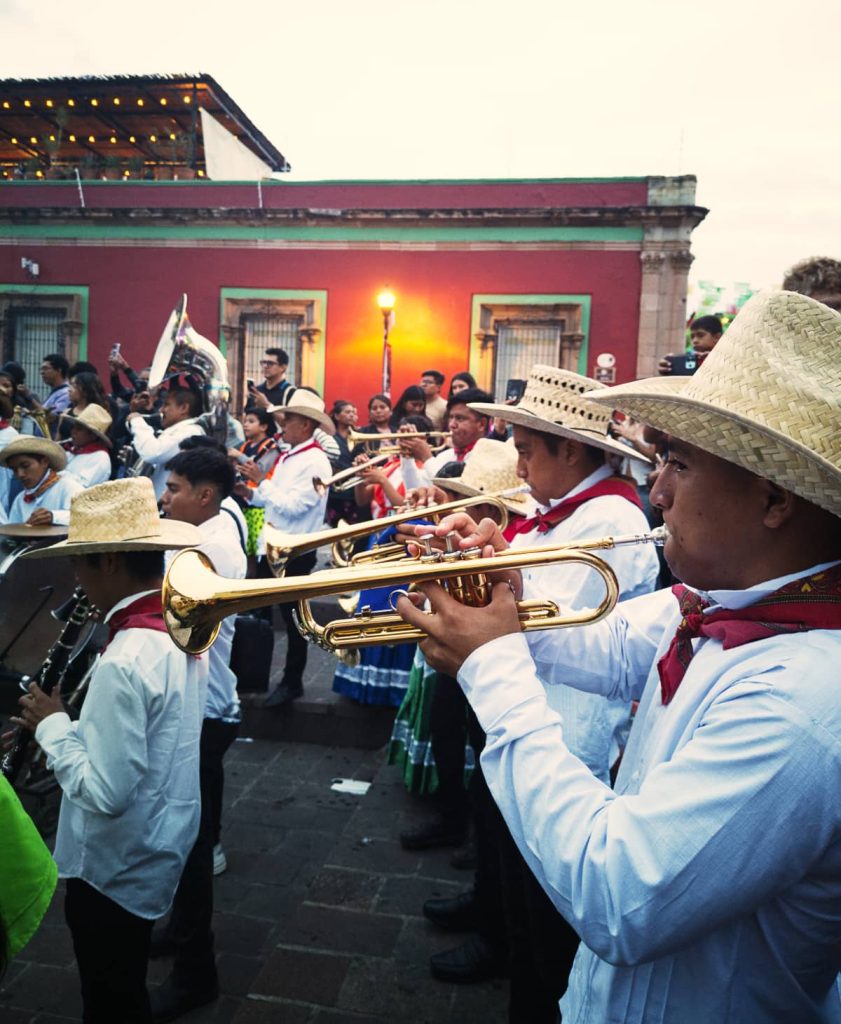
The sound of trumpets, trombones, tubas, clarinets, and drums echoes through the streets, drawing people from their homes and businesses to celebrate. The music provides the rhythm that keeps everything going. Without the band, a calenda would lose its momentum.
El Patrón
Near the front of a religious calenda, you’ll see an image of the community’s patron saint carried through the streets, known simply as el patrón or la patrona.
Residents accompany the saint with music, dancing, and fireworks as they march through the neighborhood before returning to the church for Mass or other festivities.
Mezcal
No calenda feels complete without mezcal. Groups within the procession carry bottles of it, offering a small shot to spectators as they pass.
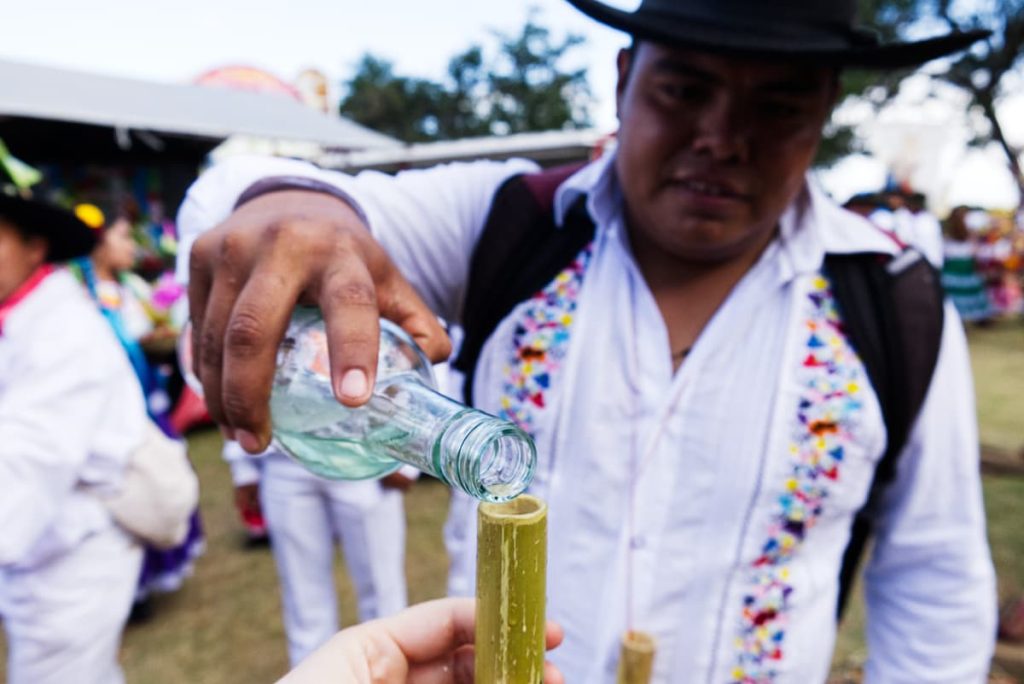
So when the state government asked delegations to stop handing out mezcal during the official Guelaguetza parades this year, citing concerns about public drinking, the backlash was swift. As locals put it: what’s a calenda without mezcal?
El Torito
One of the most exciting moments of many calendas comes when el torito makes its appearance.
Despite the name, it isn’t a real bull. Instead, it’s a lightweight wooden or metal frame shaped like a bull and covered with fireworks. A volunteer carries the structure through the streets while spinning and dancing as fountains of sparks, spinning wheels, and other pyrotechnics erupt around them.
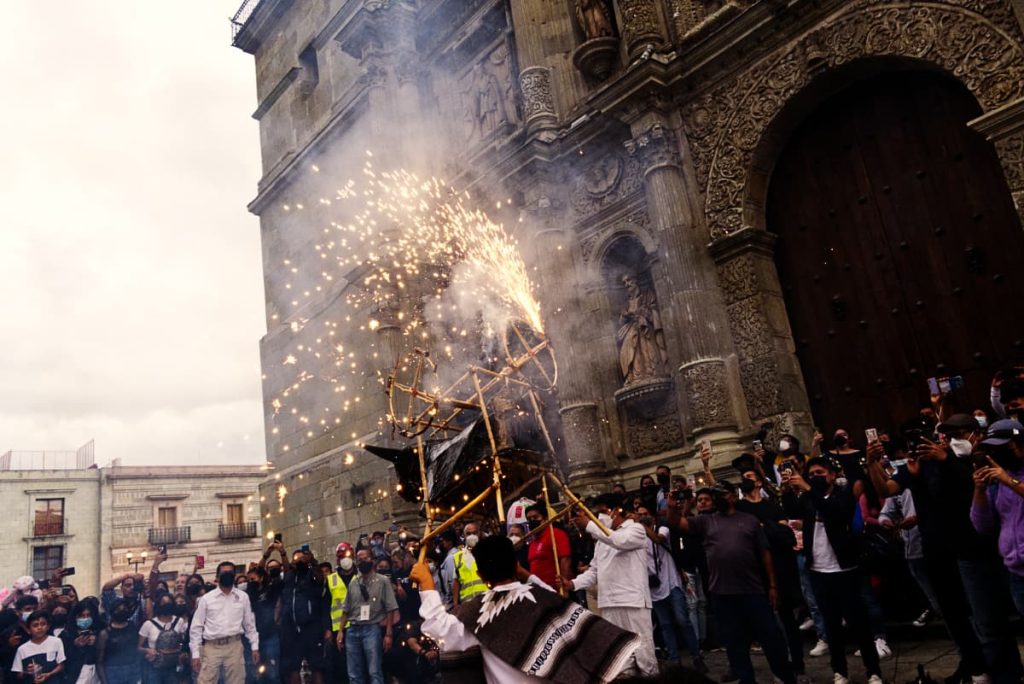
The torito usually appears near the end of the celebration and draws cheers from the crowd as spectators laugh, run, and dodge the showers of sparks. While thrilling to watch, it’s important to keep a safe distance, as fireworks can be unpredictable.
Cohetes
Cohetes are another hear it before you see it part of the parades in Oaxaca. If you’ve spent any time in the city, you’ve likely been startled awake by them at 6 am, announcing a patron saint celebration.
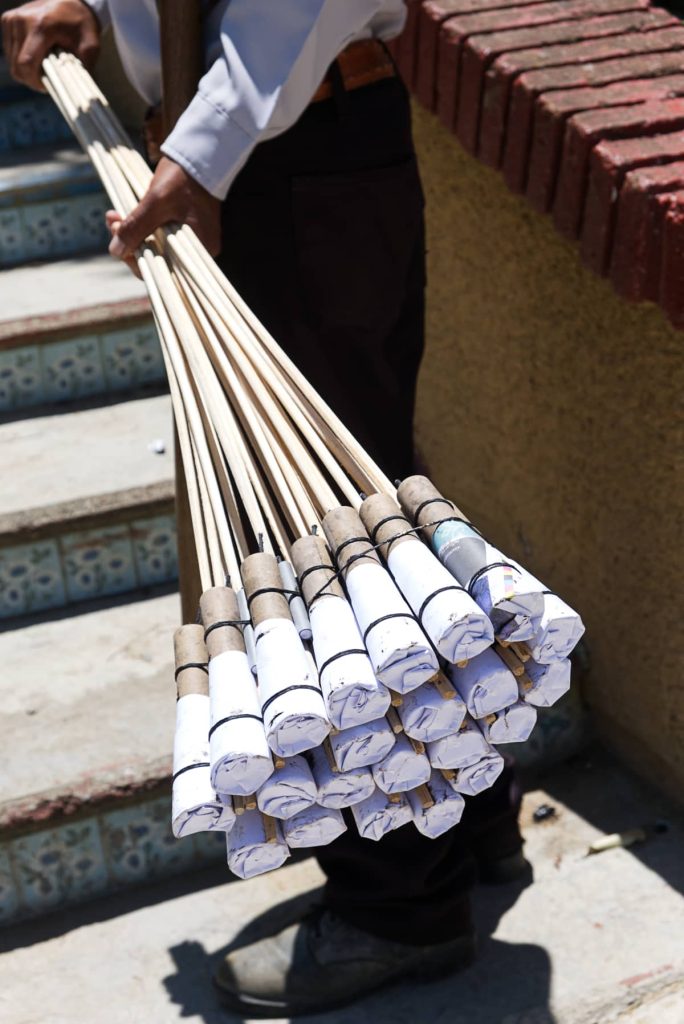
Cohetes are essentially homemade fireworks: explosives on the end of a wooden stick, wrapped in paper. They’re also set off ahead of the parade to announce its arrival. The loud boom can be heard for blocks and still startle locals, especially when they skip the warning whistle.
Tips for Joining a Parade in Oaxaca
Calendas are community celebrations, and visitors are generally welcome to enjoy them. Following a few simple guidelines can help you participate respectfully while having a great time and staying safe in Oaxaca.
- Watch from the sides first – Observe the flow of the parade before stepping into it. Keep in mind, parades hosted by the city are typically for spectators only.
- Join at the back – If you want to join, dancing along the back with other guests is a safe and respectful way to integrate yourself.
- Respect performers – Give dancers, musicians, and puppet carriers room to move safely. Never step in front of them.
- Ask before taking close-up photos – Most participants are happy to be photographed, but asking is appreciated.
- Watch for fireworks – Cohetes can be loud and unexpected, while buscapies and ratoncitos can pose a real risk to onlookers if they shoot off into the crowd.
- Keep valuables secure – Like any crowded event, pickpocketing can occur.
- Follow local energy – Some parades encourage dancing and participation, while others are more ceremonial.
- Stay hydrated – Oaxaca’s warm weather and crowded streets can be tiring, especially during longer processions.
History and Culture of Calendas in Oaxaca
The roots of calendas stretch back centuries and reflect Oaxaca’s rich blend of Indigenous and Spanish influences.
Many scholars trace elements of modern calendas to pre-Hispanic ceremonial processions that honored deities and community celebrations. Following colonization, Catholic traditions merged with existing Indigenous customs, creating new forms of public celebration centered around patron saints and religious festivals.
Over time, these events evolved beyond purely religious purposes. Today, calendas celebrate weddings, cultural festivals, graduations, community milestones, and civic pride.
The artisans who create monos de calenda remain an essential part of this tradition. Their work preserves techniques passed through generations while continuously adapting to contemporary life. Every giant puppet represents Oaxaca’s living culture and traditions.
Perhaps most importantly, calendas embody one of Oaxaca’s strongest values: community participation. They are celebrations where spectators often become participants, where music spills into public spaces, and where traditions remain active.
Oaxaca Wedding Parade
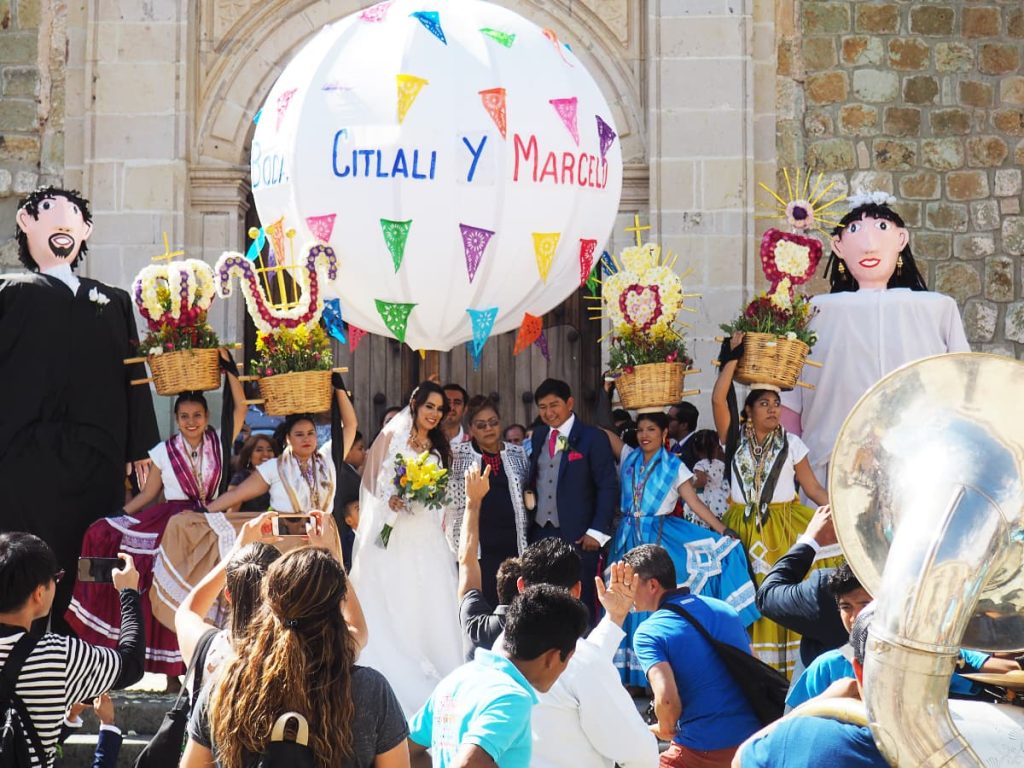
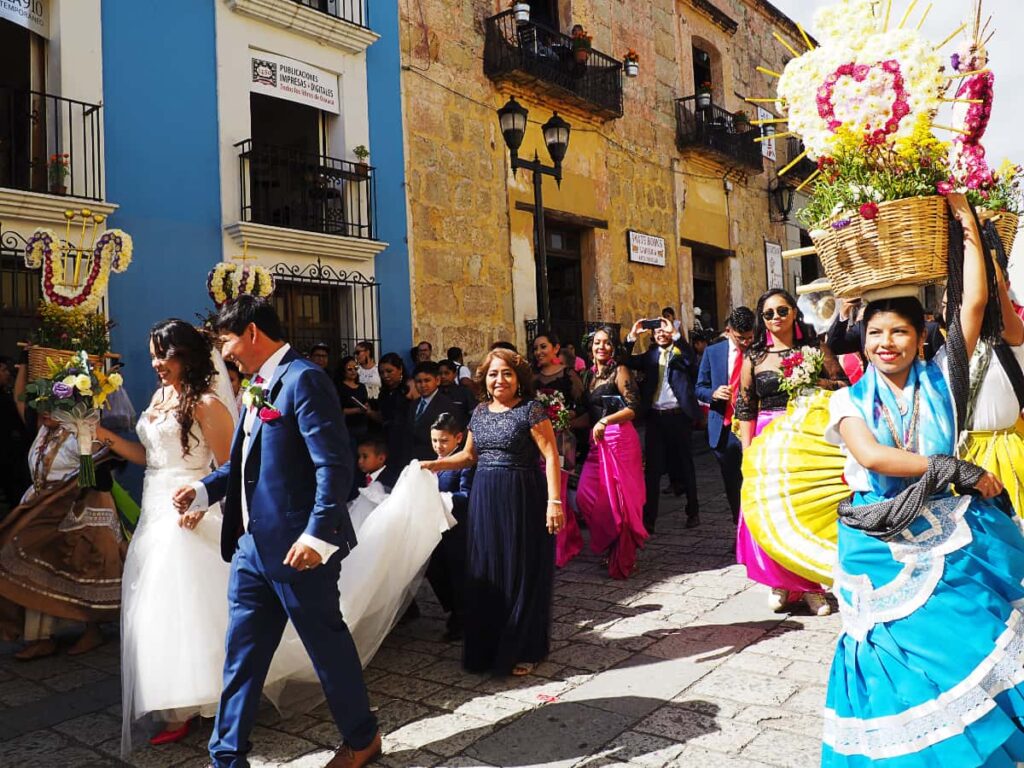
For visitors hoping to see a calenda without waiting for a major festival, a wedding parade may be the surest option.
Wedding calendas are especially common around Santo Domingo and Centro Histórico on Friday and Saturday afternoons and evenings. These celebrations typically feature a brass band, giant monos representing the couple, dancers, guests, and mezcal.
While modern wedding calendas are somewhat commercialized compared to traditional community celebrations, they still showcase many of the iconic elements that make Oaxacan parades so memorable.
Attending a Parade in Oaxaca
Whether you discover one by accident or seek one out during a festival, experiencing a calenda in Oaxaca is one of the most memorable things to do in the city.
The music, dancing, visuals, and sense of community create something far more meaningful than a typical parade. Calendas are living expressions of culture, history, and joy! Once you’ve followed one through the streets, you’ll have a newfound appreciation for Oaxaca’s blend of cultures, ethnicities and traditions.