
Oaxacan Mole: Tasting the 7 Moles of Oaxaca

What is Oaxacan mole? What does it taste like? And exactly how many moles are there, anyway?
To start, I want you to think of mole more like a multiverse than a single recipe. While a mole tasting in Oaxaca might revolve around the classics, most locals will tell you there are far more than seven. And the ingredients of each vary by region and family.
I grew up eating mole at markets, fiestas, and around the table at home. When I was old enough, my mother and grandmother taught me how to make mole step by step. And nothing teaches you respect for this complex sauce like being elbow-deep in hand ground spices and chilis!
In this guide, I’ve detailed the 7 moles of Oaxaca, plus two bonus moles that you’re likely to see on menus while exploring the food scene in the city. I included their key ingredients and flavor profile as well as suggestions for where to eat mole in Oaxaca.
Let’s jump in and together we’ll make sense of the mole multiverse.

This article may contain affiliate links. This means if you click a link on our blog and make a purchase, we earn a commission at no additional cost to you. For full information, please see our disclosure.
What is Oaxacan mole?
Oaxacan mole is a traditional sauce made from a complex blend of chiles, spices, seeds, herbs, and other ingredients that are toasted, ground, and simmered into a rich, deeply flavored sauce. Mole isn’t just one recipe, though. In Oaxaca, mole is a whole family of sauces that vary by region, season, and chef.
The 7 Moles of Oaxaca
The seven moles of Oaxaca are a traditional way of grouping the region’s most well-known sauces, but they’re not meant to be a strict or exhaustive list.
Each mole has its own personality, texture, and level of intensity. Some are dark and complex while other moles are creamy, tangy or bright.
1. Mole Negro (Black Mole)
🍴 Flavor Profile: sweet, smokey, and rich with bitter notes
🌶️ Key Ingredients: chilhuacle negro, mulato chile, chocolate, burnt tortilla

Mole negro is known for its complex flavor profile and elaborate preparation, which can take several days. It is sweet, rich and smoky, with bitter notes from the chocolate and burnt tortilla.
I have to confess that mole negro my favorite mole. Often prepared for birthdays and weddings, this mole is synonymous with celebration in Oaxaca.
2. Mole Rojo (Red Mole)
🍴 Flavor Profile: spicy, acidic, savory
🌶️ Key Ingredients: chile guajillo, chile ancho, red tomato

Mole rojo is mole negro’s savory cousin. Think spicy, savory and bright. This mole is also thick, rich, and creamy in texture, with notes of bitter chocolate and dried chilis to balance it out. This is a great choice for those who would love to try a classic mole but prefer savory over sweet.
3. Mole Coloradito
🍴 Flavor Profile: spicy, bold and semi sweet
🌶️ Key Ingredients: toasted ancho and guajillo chiles and chocolate
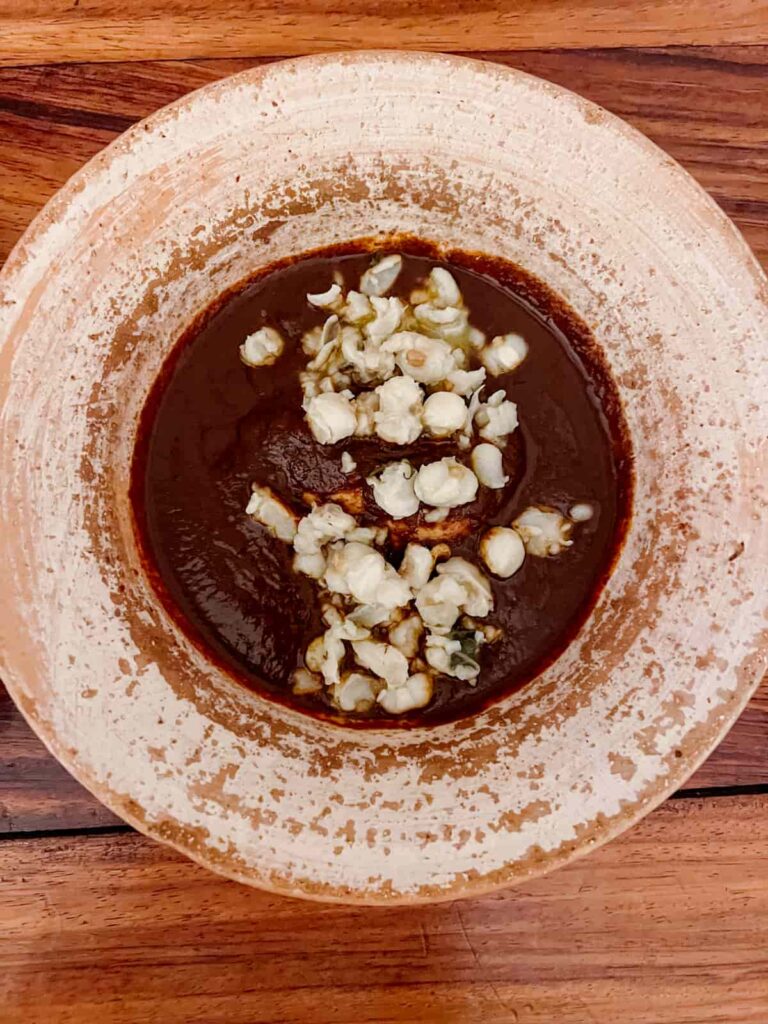
Coloradito is also a celebratory mole. It’s less sweet and smoky than negro and with a stronger kick. Think of coloradito as a marriage between mole negro and rojo.
It has some of negro’s characteristic sweetness with rojo’s bright flavors and bold spice. Coloradito is a must try mole for those who enjoy bold flavors and spice. It’s one of the spicier moles on this list.
No one is expecting you to eat mole pristinely. Rip a tortilla in half, roll it up, and dip it in the mole.
– Xochitl (author)
4. Mole Amarillo (Yellow Mole)
🍴 Flavor Profile: velvety, herbal and rustic
🌶️ Key Ingredients: chilhuacle amarillo, hoja santa, masa

Want to learn more? Discover what Oaxaca is known for.
Mole Amarillo is one of the simpler moles to make, but that doesn’t make it boring. A good mole amarillo is savory and hearty, with a licorice-like bite from hoja santa and smoky notes from chilhuacle amarillo chili.
If mole negro is the mole of celebrations, then amarillo is the working man’s mole. It’s not uncommon to find this mole with chicken nestled inside a comforting empanada de amarillo, one of the most popular street foods in Oaxaca.
5. Mole Verde (Green Mole)
🍴 Flavor Profile: earthy, vegetal, bright
🌶️ Key Ingredients: miltomate, cilantro, epazote
Oaxaca’s mole verde is unique. Unlike other regions of Mexico where mole verde is creamy and mild, Oaxacan mole verde is made of a distinct medley of herbs and vegetables.
This type of mole is best when stewed with espinazo de puerco; a cut of pork that deepens the flavor and anchors the brightness of this zesty mole.

6. Mole Chichilo
🍴 Flavor Profile: earthy, slightly bitter and herbaceous
🌶️ Key Ingredients: chilhuacle chilis, avocado leaf, and toasted tortilla
Chichilo’s strong flavor profile and pre-Hispanic roots set it apart from the other moles of Oaxaca.
Dark and smoky with an intentionally bitter edge, this mole is deeply rooted in Indigenous cooking techniques and can be harder to find. Chichilo is best appreciated by those who enjoy flavors like dark chocolate, black coffee, and full-bodied red wines.
Did you know? The word mole comes from the Nahuatl word ‘mōlli’, which signifies sauce or mixture. In Oaxaca, moles evolved through centuries of indigenous technique, local ingredients, and later, colonial influence. Each mole is a unique representation of the conditions and history that shaped it.
7. Mole Manchamantel
🍴 Flavor Profile: sweet, spiced and fruity
🌶️ Key Ingredients: ancho chile, pineapple, plantain and cinnamon
Texturally distinct from other moles on this list, manchamantel is more like a fruit-forward stew than a nutty, silky mole. Its name literally means “tablecloth stainer” due to its deep color.
This mole is best enjoyed by those who like a sweet and savory combination. It’s full of bold flavors without the heat of other moles.


8. Estofado
🍴 Flavor Profile: briny, lightly sweet and tangy
🌶️ Key Ingredients: chiles en vinagre, green olives, sesame
While some of the other moles on our list can be found across Mexico, estofado is one of those dishes that is decidedly Oaxacan.
Tangy, bright, and zesty in an almost sour way, estofado has one of the most distinct flavor profiles on our list. And don’t be surprised when your plate comes out garnished with a few green olives!
9. Almendrado
🍴 Flavor Profile: sweet, smooth and nutty
🌶️ Key Ingredients: almonds, cinnamon and raisins
Almendrado is one of the lesser known moles regional to Oaxaca. It’s a light, silky mole with sweet and nutty notes. This mole is usually served with chicken dishes. It’s decidedly mild, and perfect for those looking to sample something flavorful without the spice or bitter notes that are present in other moles.
Where to Eat Mole in Oaxaca
Many travelers ask about a mole tasting in Oaxaca as a way to try the 7+ varieties. You’ll also find many restaurants and market stalls with mole on the menu. I’ve detailed both below as well as where to buy mole in Oaxaca.
Mezcal and Mole Tasting Oaxaca
Want to explore the mole and mezcal scene in one spot? Book this mezcal and mole tasting led by a certified sommelier.
Over the course of the evening, you’ll sample seven handcrafted moles while talking about the flavors and regional differences. Each mole is paired with an artisanal or ancestral mezcal chosen to showcase the distinct characteristics of different agaves: Espadín, Tobalá, Cuixe, Tepeztate, Jabalí, and Papalometl.
Restaurants to Eat Mole
Several of the best restaurants in Oaxaca offer curated mole tastings. El Escapulario is a great option in centro and Mo-Kalli is located near the Tlacolula Sunday market.

In addition, Ancestral in the Xochimilco neighborhood has an amazing dish of octopus in mole amarillo. And on a sweeter note, Casa Oaxaca has one of the best manchamantel dishes I’ve ever had.
If you’re looking for vegan mole, Los Muchitos and Etnofood are good options. Both are detailed in our guide to vegan food in Oaxaca.
How To Eat Mole
First timers may be surprised when presented with a simple dish of mole. A typical plate includes a chicken leg, thigh, or other meat bathed in a few ladles of mole accompanied by a side of rice and tortillas.
My biggest tip? No one is expecting you to eat mole pristinely. Rip a tortilla in half, roll it up, and dip it in the mole. If you’re served a chicken leg, don’t be afraid to pick it up and dig in. The key is to enjoy the experience without being too worried about how you look while doing it!
You’ll also find mole used in various dishes:
- Enmoladas – a typical breakfast dish of folded tortillas topped with mole negro
- Enchiladas de Coloradito – tortillas stuffed with chicken or cheese and bathed in mole coloradito
- Empanadas de Amarillo – a typical street food of shredded chicken and mole amarillo stuffed in a large tortilla cooked on the comal.
Where to Buy Mole in Oaxaca

If you’re looking for the best places to buy mole in Oaxaca, you should read my guide to the markets of Oaxaca.
You’ll find the best markets to pick up a variety of moles. Keep in mind, since mole is considered a paste you need to put it in your checked luggage.
FAQ About Oaxacan Mole
What are the Seven Moles of Oaxaca?
The seven moles of Oaxaca are mole negro, mole rojo, coloradito, amarillo, verde, chichilo, and manchamantel. These are the most commonly found at a mole tasting. However, most Oaxacans consider there to be more than just 7 moles in our state. I’ve included two bonus moles of Oaxaca that you’ll see on menus.
How many moles are in Oaxaca?
How many moles there are in Oaxaca really depends on who you ask. Many people report there to be seven moles, but I’m of the belief that there are at least nine! Culinary traditions vary so much region to region, that many chefs will tell you there are infinite varieties of Oaxacan mole.
What is the most popular mole in Oaxaca?
The most popular mole in Oaxaca is mole negro. This is due to its use in celebrations like weddings, birthdays, baptisms and other festivities. Really, though, the most popular mole comes down to a matter of taste. There’s a mole for every palate and occasion.
What does Oaxaca mole taste like?
Oaxaca mole tastes sweet, nutty, rich, vegetal, bitter, and/or spicy depending on the variety. There is no one singular mole type or recipe, and each of the seven moles has its own flavor profile. Mole negro, for example, is extremely rich, sweet, and a touch bitter. On the opposite end, mole verde, is herbal and bright.
Does Oaxacan mole have chocolate?
Some varieties of Oaxacan mole have chocolate. Mole negro, coloradito and rojo, for example, all include chocolate as a key ingredient. Although other moles, like mole verde or amarillo, don’t contain chocolate. If you have an allergy or aversion to chocolate, there are many moles you can still try.
Is Oaxaca mole sweet?
Oaxaca mole can be sweet, depending on the variety and recipe. Certain varieties of mole like negro, coloradito, almendrado and manchamantel are especially known for their notes of sweetness. Other varieties of Oaxacan moles like amarillo, verde or chichilo have zesty, savory or bright flavor profiles.
What do you eat mole with?
Mole is eaten with meats like chicken, pork or beef and accompanied with sides like rice and tortillas. While less common, some families, like mine, eat mole stewed with vegetables like squash, potatoes or zetas, a seasonal variety of mushrooms.
Can you bring mole back from Mexico?
You can bring mole back from Mexico, but it must go in your checked baggage due the consistency being considered a paste. I suggest packaging the mole carefully to avoid leaks or spills and refrigerating upon arrival to avoid loss of flavor or spoilage.
Final Thoughts About Moles of Oaxaca
Oaxacan moles aren’t just food. They’re history, ritual, and identity on a plate. Whether you’re tasting all seven varieties of Oaxacan moles in one sitting or slowly discovering them through markets and home kitchens, each mole tells a different story.