
Blessing of the Animals: August Tradition in Oaxaca

It’s mid-afternoon on August 31st, the day of the Blessing of the Animals in Oaxaca City, and the courtyard at La Merced Church is already alive with anticipation.
Dogs tug at their leashes, parrots perch proudly, cats peer nervously, and somewhere in the mix there may even be a goat, rabbit or chicken waiting its turn.
Locals greet one another, children laugh, cameras come out, and the atmosphere feels equal parts celebration and gentle chaos. Then, as the priest arrives, the crowd settles into anticipation.
The Blessing of the Animals is a window into local faith, community life, and the affection people have for their animals. If you’re visiting Oaxaca in August, this is one tradition you won’t want to miss. Here’s what to expect, what time it starts, and tips to experience it.
This article may contain affiliate links. This means if you click a link on our blog and make a purchase, we earn a commission at no additional cost to you. For full information, please see our disclosure.
What Is the Blessing of the Animals in Oaxaca?
The Blessing of the Animals in Oaxaca is an annual religious tradition where residents bring their pets and other animals to receive a special blessing from the priest for health, protection, and well-being. Held in the courtyard of La Merced church, the gathering combines religious devotion with a joyful community atmosphere.
When and Where is the Blessing of the Animals?
The event takes place each year on August 31, the feast day of San Ramón Nonato.
It is held at the Templo y Ex-convento de la Merced (map), located at the corner of Independencia and Manuel Doblado in Oaxaca’s historic center. Owners and their animals usually begin arriving around 3 pm and the official blessing of the animals starts at 4 pm.
La Merced is the only church in Oaxaca City with an image of San Ramón Nonato, which is why the blessing of the animals is celebrated here.
While blessings of animals take place in many parts of Mexico and around the world, Oaxaca’s August 31 celebration is especially tied to San Ramón Nonato and has become a beloved local custom unique to Oaxaca.
What to Expect on the Day
One of the best parts of the Blessing of the Animals in Oaxaca happens before the ceremony even begins. By mid-afternoon, the courtyard becomes a lively parade of pets and personalities. Owners socialize while animals sniff, chirp, bark, and squirm in every direction.
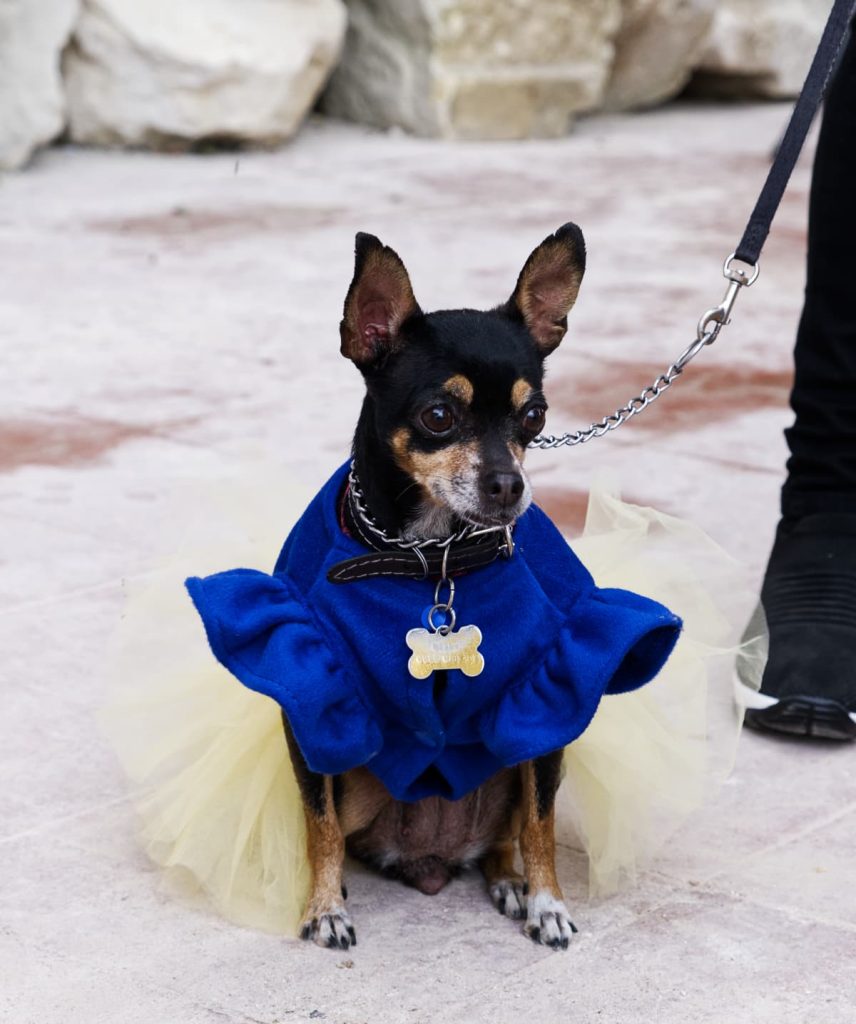
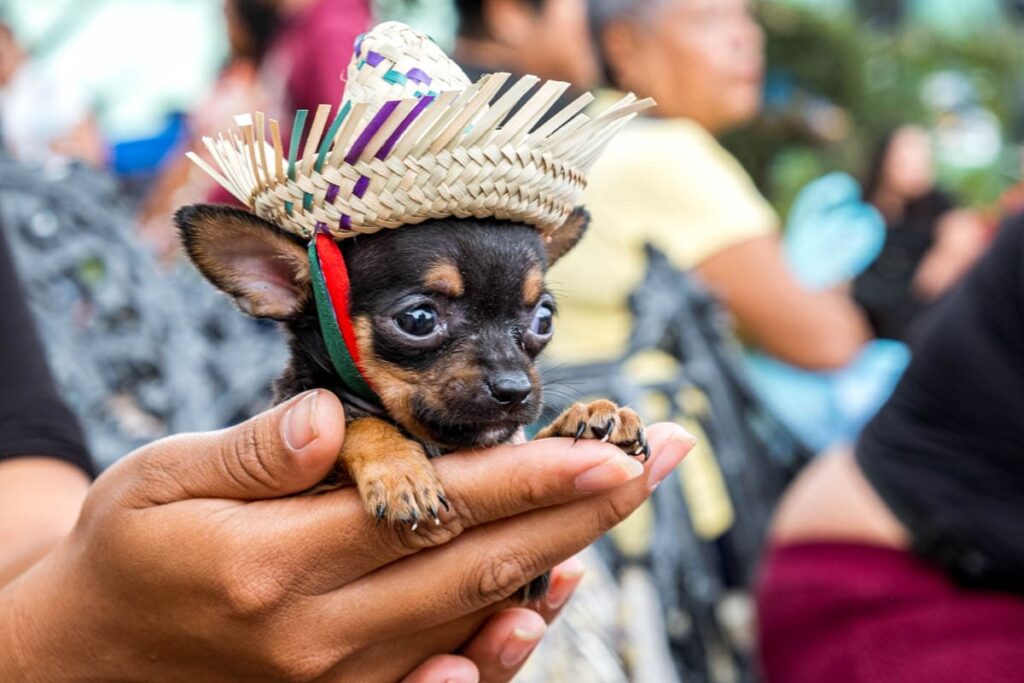
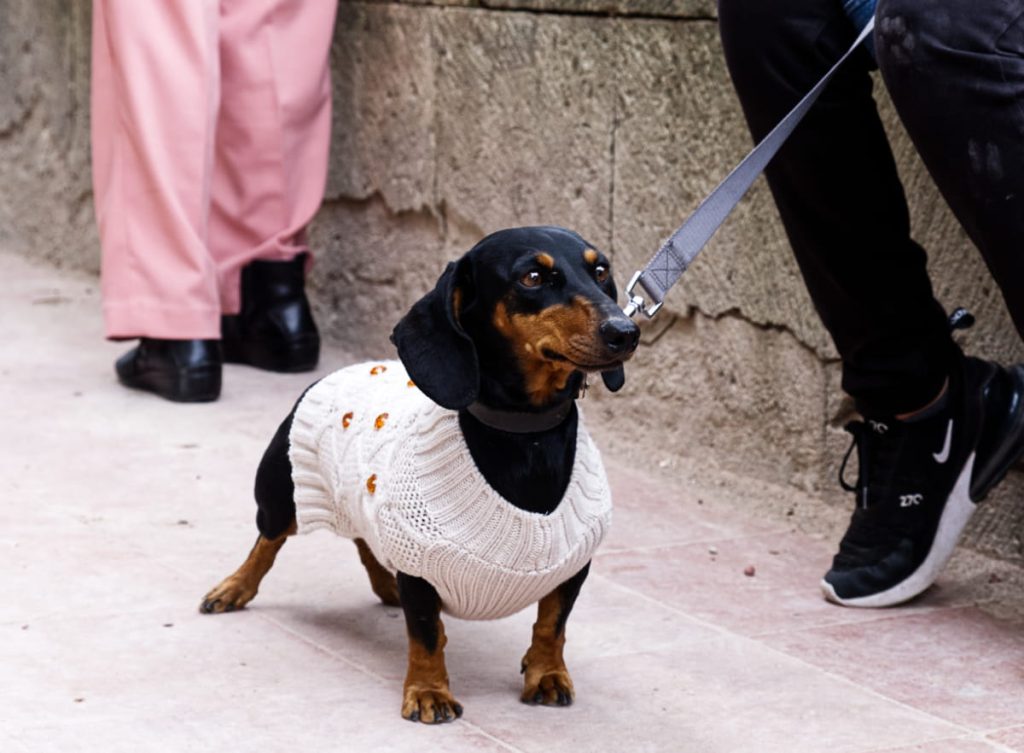
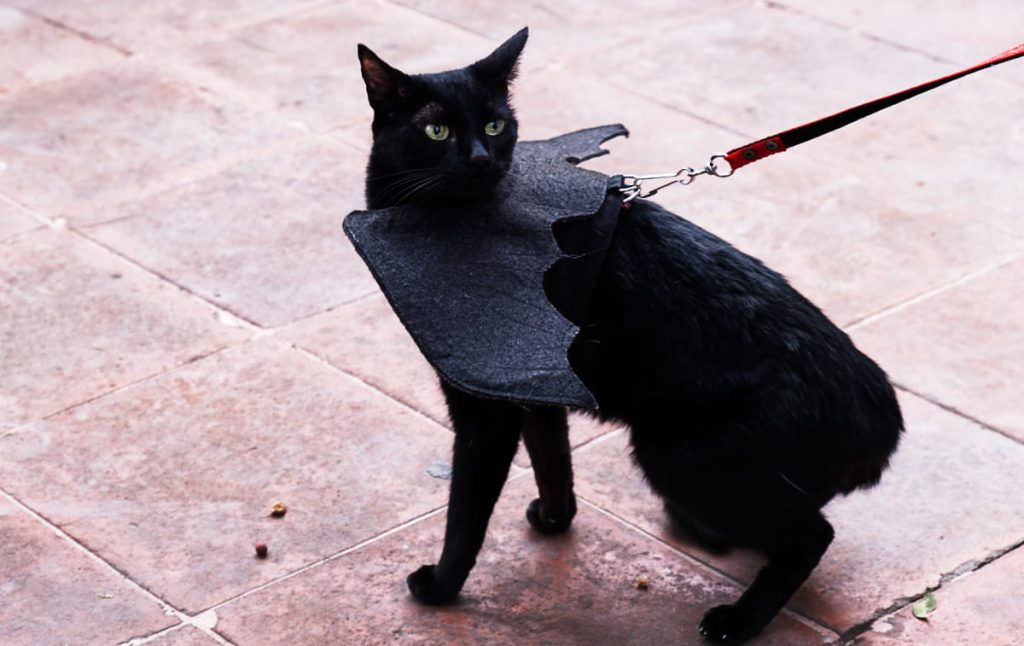
Many pets arrive dressed for the occasion. You may see dogs in dresses, bow ties, sombreros, or tiny saint costumes. Cats often remain less enthusiastic participants, watching the scene from carriers with visible skepticism.
I used to call Mexico “a country of dog people” when I was younger for our unique, collective love of dogs; but in modern times cats have become just as popular. Additionally; many people keep exotic (to a foreign spectator) pets.
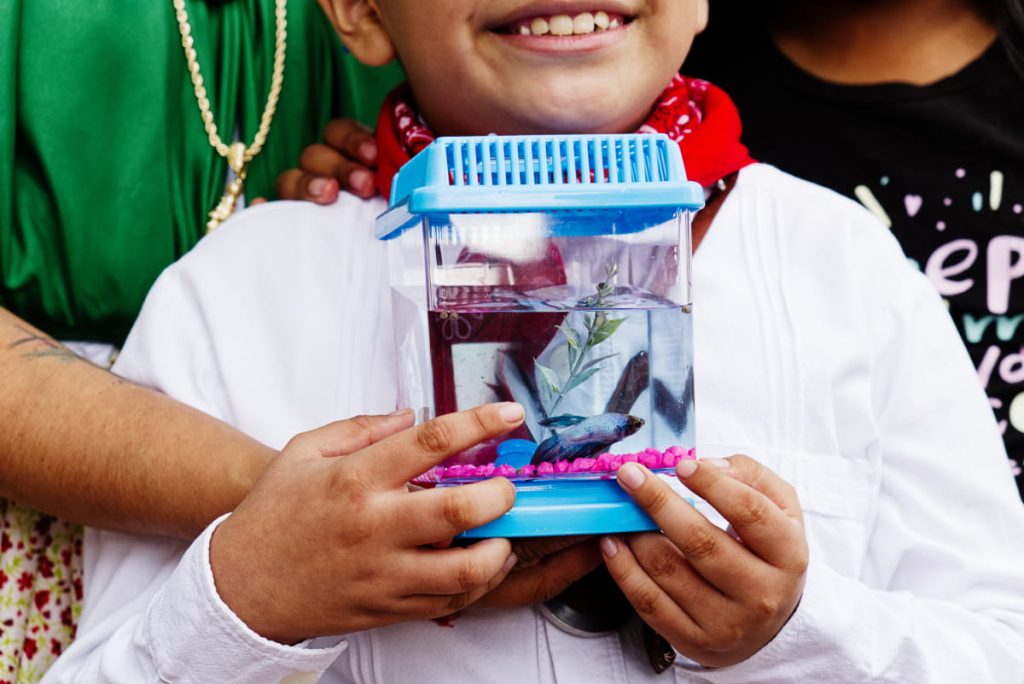
The range of species can be surprising. In addition to dogs and cats, past participants include birds, fish, rabbits, ferrets, turtles, and even the occasional armadillo. As a child, I remember hermit crabs, chicks, budgies and geckos being popular choices as well.
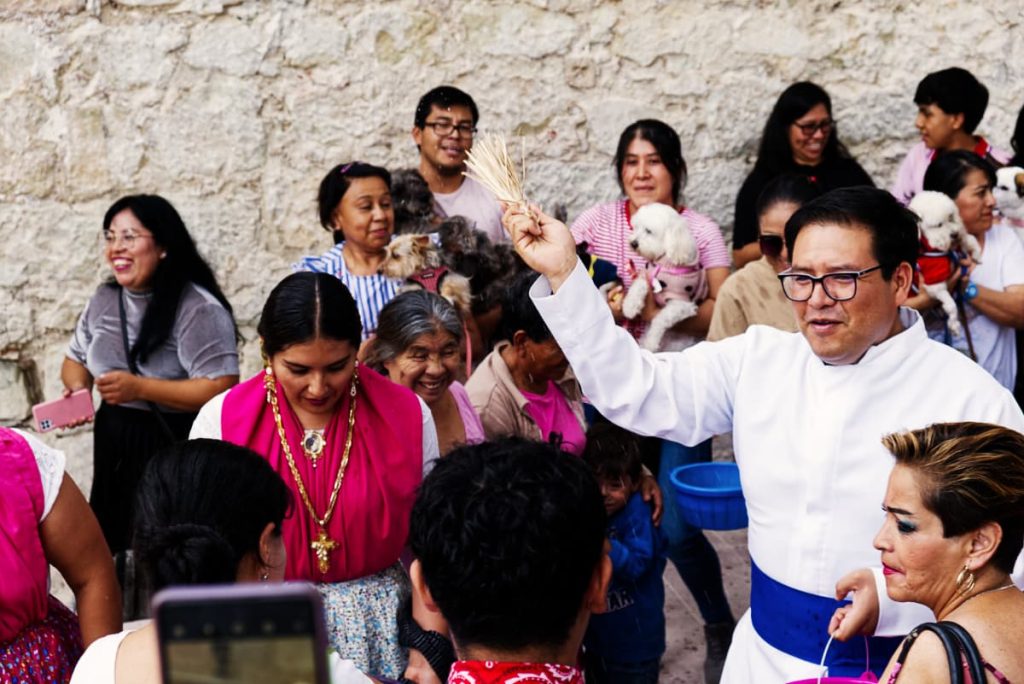
When the ceremony begins, the priest stands at the church entrance near a large wooden carving of San Ramón Nonato, often surrounded by blooming lilies. After prayers and a litany, he blesses the animals with holy water as owners step forward one by one.
Practical Tips for Visitors
Arrive Early – If you want the full experience, arrive by 3 pm. The hour before the blessing is often the most entertaining, as the courtyard gradually fills and both people and animals mingle.
Bring a Camera – This is one of the most photogenic traditions in Oaxaca: animals in colorful costumes, colonial architecture, flowers, and warm afternoon light.
Always Ask Before Taking Photos – Most people are proud to show off their pets, but it’s polite to ask permission before photographing animals or families up close.
It’s Free and Open to Everyone – You do not need to be a parish member or local resident to attend. You also do not need to be religious to attend. Visitors are welcome to observe respectfully.
Prepare for Rain – August falls during Oaxaca’s rainy season. Bring a light rain jacket or small umbrella in case of an afternoon shower.
Be cautious around plants – Certain flowers can be toxic to pets, especially cats. So keep an eye out for this during the celebration to ensure your pets’ safety.
The Evolution of the Tradition
Like many long-standing customs, this event has changed with the city itself.
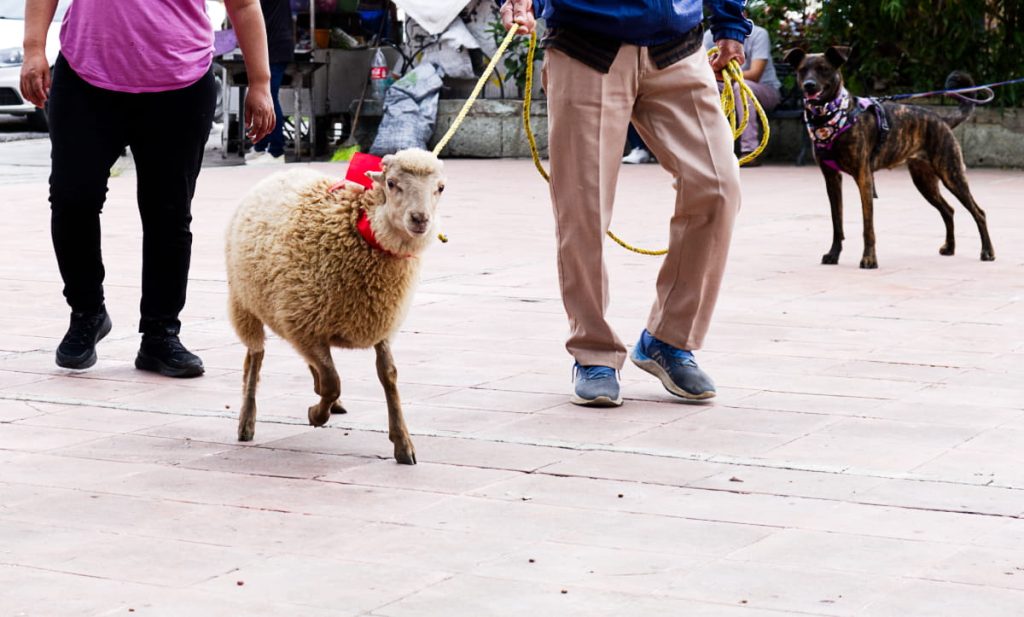
In earlier times, blessings may have featured donkeys, goats, horses, and other working animals that supported daily life in Oaxaca. Today, companion animals dominate the gathering, with dogs and cats often arriving dressed in festive outfits.
That shift reflects broader changes in urban Oaxacan life. As the city has grown and lifestyles have changed, more households keep pets as companions rather than relying on animals primarily for labor. The blessing remains a gesture of gratitude but now it celebrates emotional bonds as much as practical service.
The tradition of blessing animals in Mexico likely traces back to colonial-era Catholic practices introduced by Franciscan monks and adapted over generations by local communities.
Who Is San Ramón Nonato?
San Ramón Nonato was a Mercedarian friar from Catalonia, Spain, born in 1204. His byname, “Nonato,” means “not born,” referring to his birth by Caesarean section after his mother died in labor.
Though he is associated with several causes in Catholic tradition, in Oaxaca he is honored through this distinctive August celebration that welcomes animals and their caretakers.
Wrapping Up the Animal Blessing in Oaxaca
The Blessing of the Animals in Oaxaca is more than a charming photo opportunity. It’s a living tradition that reveals the city’s warmth, humor, and sense of community.
If you are in Oaxaca on August 31, arriving early at La Merced lets you witness one of the most genuinely local events of the season. Between the costumes, the ceremony, and the joy of the crowd, it’s the kind of tradition that reminds you why travelers keep coming back to Oaxaca.