
5 Best Ruins in Oaxaca Mexico to Visit

Oaxaca Mexico is a living tapestry of cultures, and one of the best ways to connect with its ancient heritage is by exploring the ruins near Oaxaca. From grand Zapotec ceremonial centers to lesser-known gems, the Central Valleys that surround Oaxaca City hold some of the most fascinating archeological sites in all of Mexico.
The major ruins in Oaxaca are all located within an hour of the city, with Monte Albán and Mitla being the most accessible. Most visitors combine them with a visit to a nearby artisan workshop, traditional market, or mezcal distillery.
In this guide, I’ve detailed what makes each site special, how to visit (including ruins tours), and practical info to plan your trip. From there, you can decide which ones belong on your itinerary based on your interests.
This article may contain affiliate links. This means if you click a link on our blog and make a purchase, we earn a commission at no additional cost to you. For full information, please see our disclosure.
Top Ruins Near Oaxaca City
Below are five of the most fascinating archaeological sites near Oaxaca, ranging from well-known landmarks like Monte Albán to more obscure sites like Labityeco.
Many can be included in a day trip from Oaxaca City, making it easy to combine your visit with other destinations in a single day.
1. Monte Albán
📍 Map Location
⌚ Hours: 8 am-5 pm, every day
💵 Cost: 210 MXN for visitors, 105 MXN for national and residents
⭐ Book a Monte Albán tour
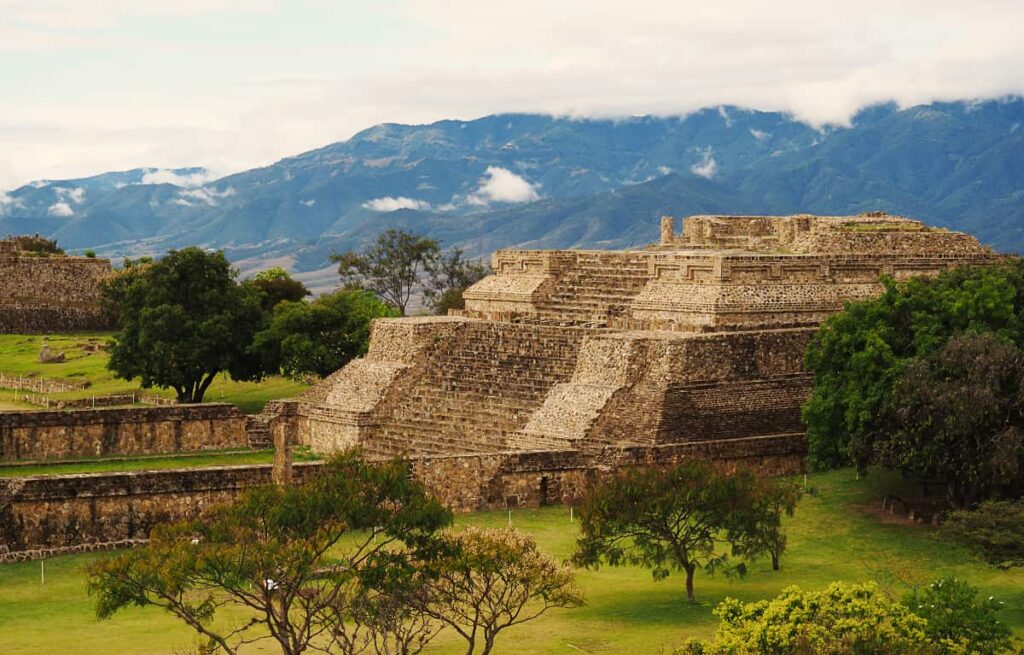
Monte Albán is the most iconic of all the ruins in Oaxaca Mexico and an absolute must for first-time visitors. Perched dramatically atop a flattened hilltop with sweeping views of the Oaxaca Valley, it served as the ceremonial, political, and economic heart of the Zapotec civilization for over a millennium.

The massive plazas, stepped pyramids, ball court, and intricate stone carvings give a vivid picture of ancient Zapotec life at this UNESCO World Heritage site.
What makes Monte Albán stand out is not just the scale, but the sense of mystery you feel walking past pyramids and tomb markers that are more than 2,000 years old. The site also features an observatory that highlights the Zapotecs’ sophisticated astronomical knowledge.
👉 For a deeper dive of what to expect, read more in our full guide to visiting Monte Albán.
2. Atzompa Archeological Site
📍 Map Location
⌚ Hours: 8 am-4 pm, every day
💵 Cost: Free
Just a short ride from Oaxaca City, Atzompa is an underrated gem that few tourists visit. This little known archaeological site in Oaxaca is ideal for travelers who want exploration without the crowds.

What sets Atzompa apart is its intimate scale, peaceful atmosphere, and the fact that it’s still an active archeological dig. The remnants of residential construction show how the ancient Mixtec and Zapotec cultures lived beyond the ceremonial center of Monte Albán.
The site features small plazas, platforms, and the largest ball court in the region, all shaded by the region’s native trees. Because of its proximity to town, Atzompa makes for a great half-day visit, either on its own, after visiting Monte Albán, or paired with nearby traditional markets and local artisan workshops such as the green clay pottery workshops that the area is known for.
3. Mitla Ruins
📍 Map Location
⌚ Hours: 10 am-4:30 pm
💵 Cost: 210 MXN for visitors, 105 MXN for national and residents
⭐ Book a Mitla ruins tour
Mitla is one of the most unique ancient sites in Oaxaca because of its extraordinary geometric stone mosaics, which you won’t find anywhere else in Mesoamerica.

Unlike the earthen pyramids of many other Mesoamerican cultures, Mitla’s architecture is defined by finely cut stone panels arranged in complex, precise patterns. The precision required to create them is a remarkable demonstration of Zapotec craftsmanship.
The original structure served as a ceremonial center and burial ground for the region’s elite. Walls, tombs, and passageways are adorned with intricate latticework, called grecas. These designs are still common today in traditional Zapotec art, crafts and clothing. Today, Mitla remains a spiritual and artistic highlight among the ruins in Oaxaca Mexico.
👉 For a detailed visitor’s overview and history, check out our complete guide to visiting the Mitla ruins.
4. Yagul Archeological Site
📍 Map Location
⌚ Hours: 8 am-5 pm, every day
💵 Cost: 210 MXN for visitors, 105 MXN for national and residents

Yagul is one of the best-preserved archaeological sites in the Valley of Oaxaca and one that hasn’t been overdeveloped for tourism.
Its blend of natural and architectural grandeur makes it special: the site is nestled into dramatic hillsides and surrounded by fertile valleys. Highlights include the cavernous rock shelter, an impressive ball court, ceremonial platforms, and an elevated fortress.
Yagul’s position within the landscape gives visitors commanding views of the valley and a real sense of how geography shaped ancient life for both defense and ritual. If you prefer a site that feels quiet, expansive, and authentic rather than crowded, Yagul belongs on your list of ruins near Oaxaca to explore.
5. Lambityeco
📍 Map Location
⌚ Hours: 8 am-5 pm, every day
💵 Cost: 145 MXN for visitors, 80 MXN for national and residents
Lambityeco is one of the region’s smaller archaeological sites near Oaxaca, but its carved stone reliefs make it a fascinating stop for visitors interested in Mixtec culture.
After the fall of Monte Albán, it served as the dominant political and economic center of the eastern Tlacolula Valley, powered largely by industrial-scale salt production from nearby saline springs. The site is known for its stucco portrait friezes, two rain god masks, and 30+ excavated tombs. Together with nearby Yagul and Mitla, it tells a broader story about what happened to Zapotec civilization after Monte Albán’s decline.
Because the site is compact, Lambityeco is ideal for travelers who want a quick but meaningful look at Oaxaca’s ancient past without committing a full or half day. It also pairs well with visits to local villages where traditional crafts and textiles are still produced.
Oaxaca Ruins Tours

If you’re not keen on navigating buses and colectivos, you should book a guided ruins tour. Also because a knowledgeable guide provides historical context that brings these ancient cities to life.
Tour operators based in Oaxaca City offer options ranging from this half-day visit to Mitla ruins to full-day cultural excursions that include visiting artisan villages, mezcal tastings, or traditional markets.
I’ve included some top options below. We also highly recommend local guide, Israel, who can customize a tour based on your interests. It’s best to send him a message on WhatsApp, or you can find him on Instagram. He speaks fluent English and Spanish.
Questions About the Archeological Sites in Oaxaca
Are there ruins in Oaxaca?
Yes, there are numerous ruins in Oaxaca. The region is home to many significant archeological sites, from the hilltop capital of Monte Albán to the mosaic-adorned tombs of Mitla and smaller gems like Atzompa and Lambityeco. Together they reflect thousands of years of Zapotec, Mixtec, and other indigenous cultures, making Oaxaca one of the richest archaeological regions in Mexico.
What are the pyramids in Oaxaca called?
The most famous pyramids in Oaxaca are called Monte Albán. These Oaxacan pyramids feature large stepped platforms and ceremonial mounds. While many Oaxaca ruins differ in style from the classic pyramids of other regions, Monte Albán’s structures remain the closest examples of pyramid-like architecture in the area.
Final Thoughts About the Ruins Near Oaxaca
Exploring ruins in Oaxaca Mexico is one of the most memorable ways to connect with the region’s ancient heritage. From Monte Albán’s sweeping hilltop plazas to Mitla’s unique stone mosaics and the quiet charm of Yagul and Lambityeco, these sites offer a blend of history, culture, and breathtaking landscapes.
Whether you’re a history buff or a casual traveler that wants to explore the ancient history of Oaxaca, these archaeological sites deliver powerful insights into the civilizations that once flourished here.